

Best overall: USACO. Best for cybersecurity: picoCTF. Best for first-time computational thinkers: Bebras. The best coding competitions for high school students in 2026 depend on whether you want algorithmic depth, team participation, or practical security challenges; Ivy Central is best for families seeking personalized college admissions counseling alongside that choice.
- USACO leads the best coding competitions for high school students 2026 shortlist for individual algorithmic development.
- Choose picoCTF for cybersecurity, ACSL for team-based computer science, and CCC for a structured programming challenge.
- Bebras builds computational thinking but is not a substitute for writing code.
- IOI requires a national selection pathway; check your country’s organizer before planning participation.
- Choose a competition you can explain through your own solutions, not just an impressive name.
Why this matters
A competition gives your programming practice a defined purpose. You must interpret a problem, choose an approach, implement it, and discover where it fails. That process produces more useful evidence of learning than a list of languages you have encountered.
For university applications, distinguish participation from achievement. Registering for a contest, completing problems, advancing through divisions, and representing a country are different accomplishments. Describe the result you actually earned.
Competition success is not an admission guarantee. Your academic preparation, university choices, and application requirements still need separate attention. Caroline Linger and Jose Kumar work directly with each student at Ivy Central to connect extracurricular decisions with a personalized admissions strategy.
What makes the best coding competition?
Use these criteria before choosing your 2026 competition schedule:
- Skill fit: The problems should stretch your current ability without requiring you to copy solutions you cannot explain.
- Subject fit: Algorithmic programming, cybersecurity, and computational thinking develop different skills. Choose deliberately.
- Entry route: Check whether you enter individually, through a school, or through a national selection process.
- Progression: Prefer a format that lets you identify what to learn next, rather than collecting unrelated participation certificates.
- Evidence: Keep permitted records of your preparation, results, and independent work. Follow the organizer's rules on sharing solutions.
- Academic balance: Match preparation to your school workload and application deadlines. A contest should support your education, not displace it.
An advanced student does not automatically need the most selective competition. The better choice is the event whose problems reveal a meaningful next step.
Best coding competitions at a glance
| Competition | Best for | Standout feature | Key limitation |
|---|---|---|---|
| USACO | Individual algorithmic progression | Bronze, Silver, Gold, and Platinum divisions | Strong emphasis on contest algorithms rather than building applications |
| Canadian Computing Competition | Structured programming assessment | Junior and Senior levels | Entry arrangements require attention to organizer and school instructions |
| American Computer Science League | School-based team participation | Computer science topics alongside programming | Participation depends on an organized team and its contest arrangements |
| picoCTF | Cybersecurity exploration | Capture-the-flag security challenges | Security puzzles are not equivalent to general software development |
| International Olympiad in Informatics | National-level competitive programmers | International competition through national delegations | No ordinary direct-entry route for individual applicants |
| Bebras | Beginners exploring computational thinking | Logic-based tasks without a programming prerequisite | Not a coding contest and not evidence of programming proficiency |
These options are ranked by use case, not by the prestige of their names. The right beginner event and the right national-team pathway solve different problems.
1. USACO: best coding competition for algorithmic progression
The USA Computing Olympiad, or USACO, centers on individual algorithmic problem-solving. Its training resources and contest divisions give students a recognizable progression from introductory competitive programming toward more demanding work.
USACO has 4 divisions: Bronze, Silver, Gold, and Platinum. Use the appropriate division as a learning target rather than treating the highest division as the only result worth pursuing.
USACO pros:
- A division structure helps you select appropriately challenging problems.
- Archived problems support deliberate practice and solution review.
- Individual participation makes your own problem-solving contribution clear.
USACO cons:
- Contest preparation does not replace experience designing and maintaining software.
- Moving upward requires sustained work on algorithms, implementation, and debugging.
Best for: Students who already write basic programs and want a structured algorithmic challenge.
For your 2026 plan, read the current participation, language, integrity, and promotion rules on the official USACO website before entering. Then solve archived problems independently and review explanations only after making a serious attempt.
Verdict: Buy into USACO as your default algorithmic pathway; pair it with a project if you also want software-building experience.
2. Canadian Computing Competition: best for structured assessment
The Canadian Computing Competition, organized by the University of Waterloo's Centre for Education in Mathematics and Computing, tests programming problem-solving. It offers 2 levels: Junior and Senior.
The level distinction helps you choose a starting point without pretending that every high school student has the same preparation. Review past problems before deciding which level matches your current ability.
Canadian Computing Competition pros:
- Junior and Senior problems provide distinct challenge levels.
- Past contests let you inspect the question style before committing.
- Programming tasks expose weaknesses in translating an idea into working code.
Canadian Computing Competition cons:
- Students need to follow the current registration and supervision arrangements.
- A contest performance captures a particular assessment, not the full range of your programming work.
Best for: Students who want a clearly defined programming assessment, especially those exploring Canadian university options.
Check the official CEMC instructions for your location and school. Confirm how results and recognition apply to your entry category rather than assuming that every participant follows identical arrangements.
Verdict: Buy into CCC when its level and entry arrangements suit you; do not choose it solely because Waterloo organizes it.
3. American Computer Science League: best for school-based teams
The American Computer Science League, or ACSL, combines programming with computer science topics. Its team-based structure makes it a useful option when your school can organize participation and students want a shared preparation routine.
ACSL is not simply another individual algorithm contest. Check the syllabus and division rules to understand the topics your team will encounter.
American Computer Science League pros:
- Computer science topics broaden preparation beyond writing code.
- Team organization creates a natural setting for discussion and practice.
- Division choices help schools match participation to student experience.
American Computer Science League cons:
- You need suitable team organization and contest administration.
- Team recognition does not automatically explain your individual contribution.
Best for: Students whose school supports a computer science team and who enjoy preparing with peers.
Ask your teacher which division fits, who coordinates submissions, and how individual results are recorded. Practise collaboratively where permitted, but follow independent-work rules during assessments.
Verdict: Buy into ACSL for an organized school team; skip it if the necessary coordination is absent.
4. picoCTF: best for cybersecurity exploration
picoCTF is a cybersecurity learning platform and competition developed by Carnegie Mellon University. Its capture-the-flag challenges introduce areas such as cryptography, web security, forensics, and reverse engineering.
This is a different route from algorithmic programming. You investigate systems and clues rather than only implementing a solution to a mathematical problem.
picoCTF pros:
- Challenges expose you to several cybersecurity subjects.
- The practice environment supports learning outside the main competition.
- Technical investigation encourages careful documentation of how you reached a solution.
picoCTF cons:
- Some challenges require unfamiliar tools and background knowledge.
- Competition eligibility and recognition rules need separate checking from practice access.
Best for: Students interested in security, cryptography, or understanding how computer systems fail.
Use only authorized challenge environments. For the 2026 competition, check the official rules before forming a team or assuming eligibility for recognition. Keep private learning notes and publish explanations only when permitted.
Verdict: Buy into picoCTF for cybersecurity exploration; skip it as your sole evidence of general programming development.
5. IOI: best for national-level competitive programmers
The International Olympiad in Informatics, or IOI, is an international algorithmic programming competition entered through national delegations. Your practical starting point is your country's selection process, not an individual application to the international event.
The standard IOI format includes 2 competition days, with 3 tasks per day and 5 hours per competition day. That demands both algorithmic depth and sustained implementation accuracy.
International Olympiad in Informatics pros:
- The national pathway provides a demanding long-term progression.
- Problems require substantial algorithmic reasoning.
- Selection represents a specific achievement that you can report accurately.
International Olympiad in Informatics cons:
- National selection is highly demanding and country-specific.
- Eligibility rules restrict who can compete.
- Preparation is a poor fit for students still learning basic programming.
Best for: Advanced competitive programmers already pursuing their national informatics olympiad pathway.
Students in India, the US, UK, UAE, and Singapore should identify their own official national organizer. Check eligibility, selection stages, and current announcements there; another country's process is not your entry route.
Verdict: Hold IOI as a long-term target until your national pathway and preparation level justify it.
6. Bebras: best for beginners exploring computational thinking
Bebras is an international computational thinking challenge built around logic and problem-solving tasks. It does not require programming knowledge, which makes it accessible before you have learned to write substantial code.
Bebras is not a coding competition. It belongs on this shortlist as a starting point, not as an equivalent to USACO or IOI.
Bebras pros:
- Beginners can engage with computational ideas without first mastering a language.
- Short reasoning tasks help identify topics you enjoy.
- Local age categories provide an age-appropriate entry point.
Bebras cons:
- Results do not demonstrate programming proficiency.
- Participation arrangements and categories differ between national organizers.
Best for: Students testing their interest in computer science before committing to competitive programming.
Check your local Bebras organizer's current arrangements. After participating, turn the reasoning skills into coding practice: implement a simple search, simulation, or rule-based solution yourself.
Verdict: Buy into Bebras as an introduction; skip it as the centerpiece of an advanced coding profile.
How this ranking works
USACO takes the default position because its division structure makes algorithmic progression easy to understand. CCC serves structured assessment; ACSL serves school teams; picoCTF serves security exploration; IOI serves national-level competitors; Bebras serves beginners.
This is a suitability ranking based on competition formats, not a claim about admission outcomes. Official organizer materials are the authority for requirements. Check their current 2026 rules before registering, especially eligibility, permitted assistance, entry arrangements, and recognition categories.
Which competition should you choose?
Choose USACO if you can already program and want a default algorithmic pathway. Choose picoCTF if security questions interest you more than contest algorithms, or Bebras if you are still discovering computational thinking.
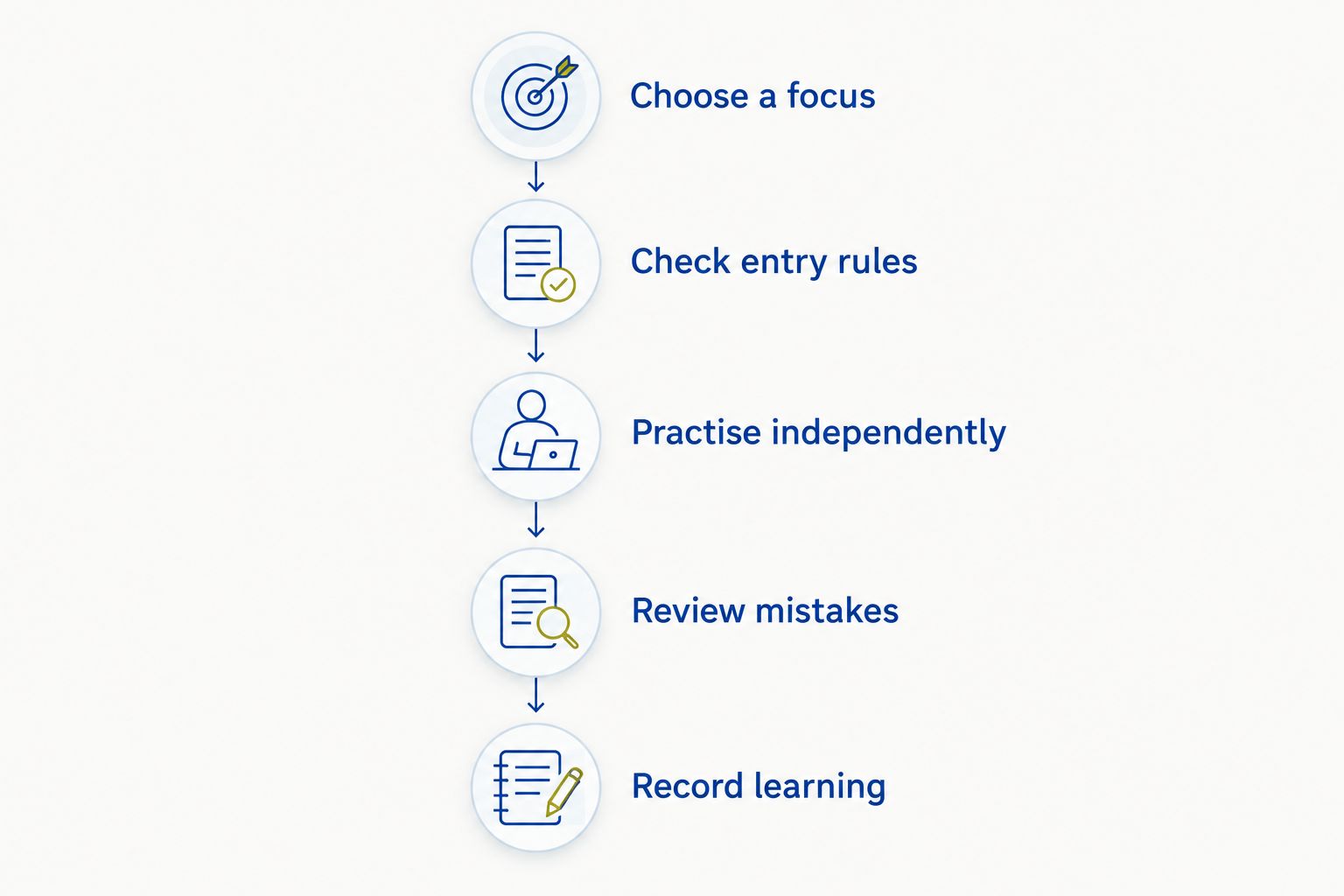
For your 2026 plan, use this sequence:
- Choose a focus: Decide whether your immediate goal is algorithms, security, or introductory reasoning.
- Check entry rules: Read the official organizer's eligibility and participation instructions.
- Practise independently: Attempt representative problems without copied solutions.
- Review mistakes: Identify whether the difficulty came from concepts, implementation, or time management.
- Record learning: Preserve permitted results and explain what changed in your approach.
For UK applications, start with the official page for the specific course: review academic requirements, any admissions assessment, and how the university evaluates subject preparation. For US applications, review each university's first-year requirements and activity-reporting instructions. Do not assume that a competition result substitutes for a required qualification or assessment.
In essays, explain a genuine intellectual turning point rather than reproducing your results list. A failed approach that led you to understand an algorithm can support a more specific account of learning than an unsupported claim of passion.
Ivy Central's college admissions counseling helps families place these choices within a broader US-versus-UK strategy. Caroline Linger and Jose Kumar work directly with each student; ask for a consultation to discuss competition fit, application and essay guidance, and university selection.
Plan your admissions strategy
Discuss competition choices, university fit, and application priorities with Ivy Central.
FAQ
What’s the best coding competition for a high school student in 2026?
USACO is the strongest default on this shortlist for students seeking individual algorithmic progression. Choose picoCTF for cybersecurity or Bebras for an introduction to computational thinking.
Can beginners enter coding competitions?
Beginners should choose a format that matches their preparation. Bebras requires no programming knowledge, while introductory programming practice should precede serious USACO preparation.
Is USACO better than picoCTF?
USACO is better for algorithmic competitive programming; picoCTF is better for cybersecurity exploration. Choose according to the subject you want to learn rather than treating the competitions as interchangeable.
Can I enter the International Olympiad in Informatics directly?
You enter IOI through your country’s national selection pathway, not an ordinary individual registration. Consult your official national organizer for eligibility and selection stages.
Do coding competitions guarantee admission to an Ivy League university?
No coding competition guarantees admission to an Ivy League university. Report your actual achievement accurately and meet every university’s separate academic and application requirements.
Do coding competition results guarantee a scholarship?
A coding competition result does not guarantee a scholarship. Check each university or scholarship provider’s published eligibility and selection criteria separately from contest recognition.
What should I write about a coding competition in my application?
State the competition, your verified result, and your individual contribution. In reflective writing, explain a specific problem, your approach, and what you learned without exaggerating recognition.
One last thing
Your strongest next step is to explain a solution without looking at the editorial. Describe why it works, where it fails, and how you would test it. If you cannot do that yet, return to the problem before adding another competition to your calendar.
Keep the distinction between a strong application and an affordable university choice equally clear. Competition recognition does not replace scholarship research, financial-aid requirements, or a family college-cost plan.
Related guides
- Best universities for computer science in the UK
- Best summer research programs for high school students
- Best universities for AI and machine learning
- Best scholarships for Indian students to study in the US