

Best overall for demonstrated financial need: Harvard College financial aid. Best merit-based option: the Robertson Scholars Leadership Program. Best graduate option for experienced Indian applicants: Fulbright-Nehru Master’s Fellowships. For undergraduate applications in 2026, build your scholarship shortlist around eligibility and university fit—not the largest advertised award.
- The best scholarships for Indian students to study in US 2026 depend on degree level and financial eligibility.
- Harvard, Yale and MIT offer need-based undergraduate aid, not merit scholarships.
- Robertson is the merit-based option for applicants targeting Duke or UNC-Chapel Hill.
- Fulbright-Nehru and Knight-Hennessy belong on graduate shortlists, not high-school application lists.
Why this matters
A scholarship list becomes misleading when it combines undergraduate financial aid, merit awards and graduate fellowships without distinguishing eligibility. You need the right funding route before you spend time on applications.
Ivy Central college admissions counseling is best for high-school students and families seeking personalized US and UK application strategy. Caroline Linger and Jose Kumar work directly with each student. Use Ivy Central to explore counseling support; scholarship selection remains a separate decision made by the university or awarding organization.
For 2026, start with the official financial-aid or scholarship office for each institution. Record the application requirements for your entry cycle rather than relying on a previous applicant’s checklist.
What makes the best US scholarship option?
Use these criteria before comparing awards:
- Degree eligibility: Separate bachelor’s applicants from students seeking a master’s or doctorate.
- International eligibility: Confirm that Indian citizens can apply; domestic eligibility does not establish international eligibility.
- Funding basis: Identify whether the award depends on financial need, academic achievement, leadership or professional experience.
- Admission fit: Keep universities where the academic program suits your interests, not just institutions with attractive funding.
- Application burden: Check whether funding requires separate forms, essays, interviews or institutional nomination.
- Renewal conditions: Read the rules for continued support, academic progress, employment and contributions.
Need-based aid and merit scholarships solve different problems. Strong grades do not automatically produce a larger need-based award, and financial need does not automatically qualify you for a merit scholarship.
Best scholarship options at a glance
The ranking below prioritizes undergraduate relevance because high-school students need a different shortlist from graduate applicants. Graduate options appear separately at the end.
| Rank and option | Best for | Standout feature | Key limitation |
|---|---|---|---|
| Harvard College financial aid | Undergraduates with demonstrated need | Need-blind admission and need-based aid for international applicants | No merit scholarships |
| Yale undergraduate financial aid | Undergraduates seeking another need-based route | International applicants receive need-based consideration | Admission remains highly selective |
| MIT undergraduate financial aid | Applicants pursuing science, engineering and related fields | Need-blind admission and need-based aid for international applicants | No merit scholarships |
| Robertson Scholars Leadership Program | Undergraduate leadership applicants | Merit-based program linked to Duke and UNC-Chapel Hill | Separate scholarship selection |
| Berea College international financial aid | Students comfortable with a work-college model | Financial assistance alongside required student work | Work participation is part of the educational model |
| Fulbright-Nehru Master’s Fellowships | Experienced Indian graduate applicants | India-specific fellowship for eligible US master’s study | Not available for undergraduate study |
| Knight-Hennessy Scholars | Graduate applicants considering Stanford | Leadership program alongside eligible graduate study | Separate Stanford program admission is required |
These are funding routes, not interchangeable scholarship products. Compare the responsibilities attached to each before deciding where to apply.
1. Harvard: best for undergraduates with demonstrated need
Harvard College offers need-based undergraduate financial aid to international students. Its admissions process is need-blind, and its aid policy meets demonstrated financial need; Harvard does not award undergraduate merit scholarships.
Best for: Indian applicants who fit Harvard academically and need financial assistance assessed through their family circumstances.
Harvard pros:
- International students qualify for need-based financial-aid consideration.
- Applying for financial aid does not disadvantage applicants under the need-blind policy.
- The funding route supports undergraduate study rather than requiring a separate graduate qualification.
Harvard cons:
- Academic distinction alone does not establish eligibility for need-based aid.
- Highly selective admission makes Harvard unsuitable as your only funding plan.
For 2026 planning, use Harvard College’s official financial-aid instructions to identify the required financial forms and supporting records. Families with business income or complex finances should prepare clear documentation rather than assume that a single income statement explains their circumstances.
Do not describe Harvard financial aid as a guaranteed full scholarship. The university calculates demonstrated need, and your family’s own assessment does not determine the award.
Verdict: Apply if Harvard fits your academic goals and you need assessed financial assistance; keep other funded options on your list.
2. Yale: best for a second need-based undergraduate route
Yale offers need-based undergraduate aid to international applicants and uses need-blind admission. Like Harvard, Yale does not award undergraduate merit scholarships.
Best for: Indian students building a need-based university shortlist rather than searching exclusively for merit awards.
Yale pros:
- International applicants are eligible for need-based aid.
- Financial need does not determine the admission decision under Yale’s need-blind policy.
- The aid route applies across undergraduate academic interests.
Yale cons:
- Strong examination results do not convert this route into a merit scholarship.
- Financial documentation remains necessary even when your academic application is complete.
Use Yale Undergraduate Financial Aid as the authority for your entry-cycle requirements. Prepare the admission application and financial-aid submission as parallel projects: completing one does not establish that the other is ready.
Yale belongs on your shortlist when its academic environment suits you. Applying simply because Yale offers aid leaves you with a weak explanation of why you want to attend.
Verdict: Apply for academic fit and demonstrated need, not for a supposed Ivy League merit award.
3. MIT: best for science and engineering applicants needing aid
MIT offers need-based undergraduate financial aid and need-blind admission for international applicants. It does not award undergraduate merit scholarships, so exceptional technical achievement does not create a separate merit-funding category.
Best for: Students whose interests align with MIT and whose families need institutional financial assistance.
MIT pros:
- International undergraduate applicants qualify for need-based aid consideration.
- The need-blind policy separates financial need from the admission decision.
- Funding eligibility does not require you to win a separate merit competition.
MIT cons:
- Technical accomplishments do not replace the financial-aid documentation.
- MIT’s selective admission requires a broader university and funding shortlist.
For 2026 applications, consult MIT Student Financial Services for the applicable forms, supporting documents and submission instructions. Keep the financial-aid checklist separate from the admissions checklist so neither disappears behind essay preparation.
Your academic application should explain your intellectual interests through genuine work and reflection. Scholarship planning should not push you toward activities selected only to sound impressive.
Verdict: Apply when MIT is an academic match; treat aid eligibility and admission competitiveness as separate questions.
4. Robertson: best for undergraduate leadership applicants
The Robertson Scholars Leadership Program is a merit-based scholarship and leadership program associated with Duke University and the University of North Carolina at Chapel Hill. International students can apply, and the program provides support across 4 years of undergraduate study under its award terms.
Best for: Applicants interested in Duke or UNC-Chapel Hill who can demonstrate leadership through sustained action.
Robertson pros:
- International applicants are eligible.
- Selection provides a merit-based route rather than a need-only route.
- Leadership development is part of the program, not merely an application label.
Robertson cons:
- Scholarship selection and university admission require separate attention.
- Leadership claims need evidence; a collection of titles does not explain your contribution.
Read the Robertson program’s official application instructions alongside each university’s admissions requirements. Confirm the submission process for your 2026 entry cycle before drafting responses or requesting recommendations.
Prepare examples that show what you changed, whom you worked with and what you learned. Explain your decisions without inflating the impact or presenting a school activity as an organization you did not actually build.
Verdict: Apply if Duke or UNC-Chapel Hill fits your goals and your leadership record supports the application.
5. Berea: best for students comfortable with required work
Berea College combines financial assistance with a work-college educational model. Its international admissions information describes financial support for international students, while student work is a required part of college life.
Best for: Applicants who want to consider a different undergraduate model and accept employment as part of their education.
Berea pros:
- International financial assistance is part of the institution’s published admissions information.
- Required work introduces an educational model distinct from conventional university study.
- Berea adds a different institutional option to a shortlist dominated by highly selective research universities.
Berea cons:
- Required work is a commitment, not an optional extracurricular activity.
- Applicants must examine the available academic programs and financial responsibilities carefully.
Read Berea’s official international applicant guidance and student labor information together. Do not reduce the decision to a scholarship headline; the work model affects how you organize your week and participate in campus life.
Ask what assistance covers, what responsibilities remain and how support works after enrollment. Use the institution’s current written terms rather than a simplified third-party summary.
Verdict: Apply only if Berea’s academic offerings and required work model both suit you.
6. Fulbright-Nehru: best for experienced master’s applicants
Fulbright-Nehru Master’s Fellowships support eligible Indian applicants pursuing master’s study in specified fields in the United States. The published eligibility framework includes at least 3 years of relevant full-time professional work experience; it is not a route from high school into a US bachelor’s degree.
Best for: Indian professionals seeking an eligible master’s program with a clear connection to their experience and future contribution.
Fulbright-Nehru pros:
- The fellowship specifically serves eligible Indian applicants.
- Its professional focus gives experienced applicants a distinct funding route.
- The application connects study goals with leadership and contribution.
Fulbright-Nehru cons:
- High-school students and applicants without the required experience are not the intended audience.
- Eligible fields and qualification requirements restrict the shortlist.
For 2026 planning, consult the United States–India Educational Foundation’s official fellowship announcement. Check degree equivalence, work experience, eligible fields and any employer-related requirements before investing in essays.
Explain why the proposed master’s study follows logically from your professional work. A prestigious university name is not a substitute for a coherent study plan.
Verdict: Apply only after confirming every eligibility condition; skip this option for undergraduate applications.
7. Knight-Hennessy: best for Stanford graduate applicants
Knight-Hennessy Scholars combines graduate funding with a leadership development program at Stanford. Published program information describes funding for up to 3 years, subject to the applicable degree and funding rules; applicants also need admission to an eligible Stanford graduate program.
Best for: Graduate applicants whose academic plans and leadership interests fit both Stanford and Knight-Hennessy.
Knight-Hennessy pros:
- Applicants from different countries can seek consideration.
- The program spans eligible graduate disciplines rather than a single undergraduate subject.
- Leadership development accompanies graduate study.
Knight-Hennessy cons:
- The scholarship application does not replace the graduate program application.
- Degree-date eligibility and program-specific requirements need separate checks.
Use the official Knight-Hennessy eligibility guidance and your intended Stanford department’s admissions instructions. Confirm how funding applies if your degree extends beyond the scholarship’s stated support period.
Do not add Knight-Hennessy to a high-school scholarship spreadsheet. Keeping graduate opportunities separate makes your undergraduate research more accurate and actionable.
Verdict: Apply for graduate study only when both application routes fit your qualifications and goals.
How to turn the ranking into an application plan
Build your 2026 funding plan in this order:
- Degree level: Remove awards that do not fund your intended qualification.
- Academic fit: Keep institutions with programs you genuinely want to study.
- Funding eligibility: Check nationality, financial need, experience and other conditions.
- Application tasks: Record separate forms, essays, recommendations and verification requirements.
- Renewal rules: Understand the responsibilities attached to continued funding.
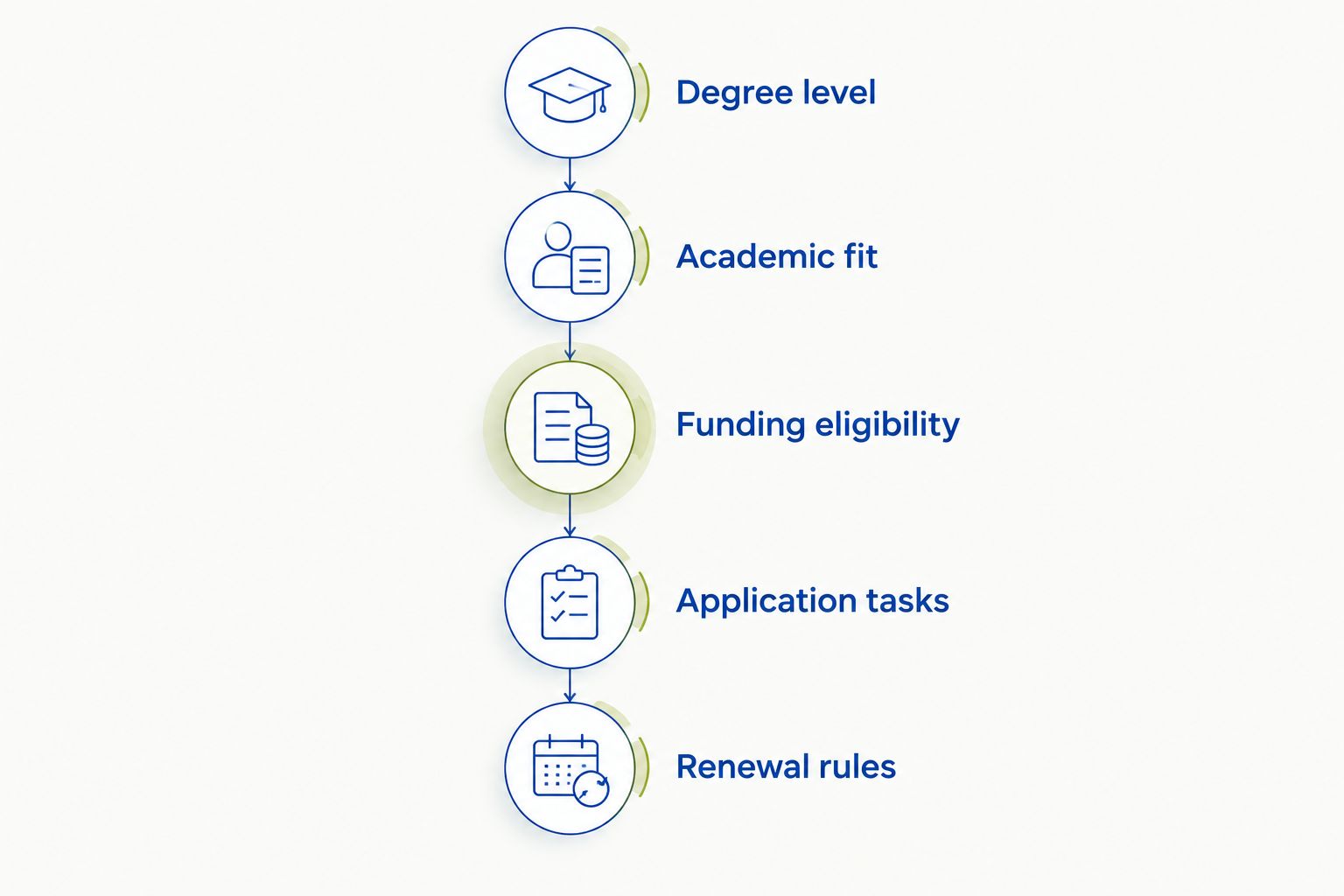
Keep evidence beside each requirement in your planning document. A university name without a verified funding route is not a financial plan.
Ivy Central college admissions counseling can help you connect university selection, application preparation and essay guidance. Caroline Linger and Jose Kumar work directly with each student; counseling does not determine scholarship awards or guarantee admission.
How the options are ranked
This ranking prioritizes undergraduate relevance, international eligibility, funding basis and application fit. Harvard, Yale and MIT lead the need-based routes; Robertson serves merit-focused leadership applicants; Berea requires acceptance of its work-college model.
Fulbright-Nehru and Knight-Hennessy appear last because they serve graduate applicants. Their position reflects relevance to high-school families, not a judgment about award quality.
Which scholarship route should you choose?
For undergraduate study, start with need-based aid if your family requires financial assistance, then add eligible merit opportunities at universities you would actually attend. Do not make admission to Harvard, Yale or MIT your only financial strategy.
Choose Robertson for a Duke or UNC-Chapel Hill leadership application, and assess Berea as a distinct educational model. Keep Fulbright-Nehru and Knight-Hennessy in a separate graduate plan.
FAQ
What are the best scholarships for Indian students to study in US 2026?
The strongest shortlist depends on degree level: Harvard, Yale and MIT offer undergraduate need-based aid, while Robertson offers a merit-based leadership route. Fulbright-Nehru and Knight-Hennessy serve eligible graduate applicants.
Can Indian students get financial aid at Harvard?
Indian undergraduate applicants can seek Harvard’s need-based financial aid. Harvard uses need-blind admission and assesses demonstrated financial need; it does not award undergraduate merit scholarships.
Is Yale financial aid better than a merit scholarship?
Yale financial aid suits applicants with demonstrated financial need, while a merit scholarship uses the awarding program’s achievement-based criteria. Compare eligibility and written award terms rather than treating either route as universally better.
Does MIT offer merit scholarships to Indian students?
MIT does not award undergraduate merit scholarships. Indian undergraduate applicants can apply for need-based financial aid under MIT’s international financial-aid policies.
Can Indian students apply for the Robertson scholarship?
International applicants, including Indian students, can apply to the Robertson Scholars Leadership Program. Follow the scholarship’s instructions and the relevant Duke or UNC-Chapel Hill admissions requirements separately.
Can I apply for Fulbright-Nehru straight after high school?
No. Fulbright-Nehru Master’s Fellowships are for eligible graduate applicants, and the published framework requires relevant professional work experience alongside other qualifications.
Does Knight-Hennessy replace the Stanford graduate application?
No. Knight-Hennessy applicants must also apply to an eligible Stanford graduate program. Check both sets of requirements and submission instructions.
Can Ivy Central guarantee a scholarship or university admission?
Ivy Central does not guarantee scholarship awards or admission. Caroline Linger and Jose Kumar provide personalized counseling and strategy, while universities and scholarship organizations make selection decisions.
One last thing
Need-blind admission is an admissions policy, not a promise that your family will have no financial responsibilities. The institution still assesses demonstrated need using its own process.
Before accepting an offer, read the financial-aid letter alongside the university’s published attendance information. Resolve unclear conditions in writing with the institution rather than relying on the word scholarship alone.
Related guides
- Ivy League admissions for Indian students: complete guide
- Best summer programs for aspiring engineers
- Best summer programs for high-schoolers
- Best summer research programs for high-school students