

Best overall for a dedicated undergraduate AI degree: Carnegie Mellon University. Best for AI research breadth: Stanford University. Best for a mathematics-led UK course: the University of Oxford. This 2026 guide compares undergraduate routes, curriculum choices and application priorities; Ivy Central helps families turn those differences into a personalized admissions strategy.
- Best universities for AI and machine learning 2026: choose Carnegie Mellon for a dedicated undergraduate AI degree.
- Choose Stanford for AI research breadth or MIT for AI combined with decision-making.
- Oxford suits mathematics-led study; Edinburgh offers a named artificial intelligence and computer science degree.
- Ivy Central supports university selection and application planning; counseling does not guarantee admission.
Why this matters
Choose the undergraduate course before the university name. An AI research reputation does not tell you which modules an undergraduate can take, how specialization works or whether a particular laboratory accepts undergraduate researchers.
Start your 2026 shortlist with school-specific checks:
- Carnegie Mellon: compare the Bachelor of Science in Artificial Intelligence with the computer science route.
- MIT: examine Course 6-4, Artificial Intelligence and Decision Making, alongside other computing pathways.
- Stanford: inspect the computer science major’s artificial intelligence track and its prerequisites.
- UC Berkeley: distinguish Computer Science from Electrical Engineering and Computer Sciences before choosing an application route.
- Oxford, Cambridge and Edinburgh: check the named undergraduate course, required qualifications and current selection process separately.
Use official undergraduate catalogs and admissions pages for these checks. Research-center pages explain research interests; they do not establish undergraduate entry requirements or access to projects. For 2026 applications, confirm the requirements for your intended entry cycle rather than copying an older applicant’s checklist.
What makes the best university for AI and machine learning?
A useful ranking separates academic fit from reputation. These criteria determine the recommendations below:
- Mathematical foundations: look for linear algebra, probability, calculus and the mathematical reasoning needed to understand models.
- Computing foundations: algorithms, data structures and software development matter before advanced machine learning.
- Specialization route: distinguish a dedicated AI degree from a computer science degree with an AI track or electives.
- Research relevance: compare faculty interests with your interests in language, vision, robotics, learning theory or decision-making.
- Undergraduate access: check prerequisites, project structures and rules for taking advanced courses.
- Application fit: match your qualifications, academic interests and preferred US or UK study structure to the actual course.
No university wins every category. A named AI degree offers a clearer specialization route, while a broader computing degree leaves more room to change direction.
Best universities for AI and machine learning at a glance
The order below is an editorial guide to undergraduate fit, not a statistical league table. Each university owns a different use-case slot.
| University | Best for | Standout academic feature | Key limitation to evaluate |
|---|---|---|---|
| Carnegie Mellon University | Dedicated undergraduate AI study | Bachelor of Science in Artificial Intelligence | A specialized route requires an early commitment to AI |
| Massachusetts Institute of Technology | AI and decision-making | Course 6-4: Artificial Intelligence and Decision Making | The degree is broader than machine learning alone |
| Stanford University | Exploring several AI research areas | Computer science major with an AI track | A research interest does not secure laboratory access |
| University of California, Berkeley | Connecting AI with computing systems | CS and EECS routes alongside AI research | You must distinguish the degree and admission pathways |
| University of Oxford | Mathematics-led computer science | Computer Science with bachelor’s and integrated master’s routes | AI is part of a broader computer science course |
| University of Cambridge | Broad computer science foundations | Computer Science Tripos | Specialization follows substantial foundational study |
| University of Edinburgh | A named UK AI degree | Artificial Intelligence and Computer Science BSc | The course combines AI with general computing |
1. Carnegie Mellon: best for a dedicated undergraduate AI degree
Carnegie Mellon’s School of Computer Science offers a Bachelor of Science in Artificial Intelligence. Its dedicated degree makes AI a central academic choice rather than an interest expressed only through optional classes.
For your 2026 shortlist, compare the AI curriculum with Carnegie Mellon’s computer science curriculum. Read the official School of Computer Science undergraduate degree pages, then identify which required subjects match the work you want to do.
Carnegie Mellon pros:
- A specifically named undergraduate AI degree.
- An academic environment that includes machine learning and robotics.
- A clear starting point for comparing AI specialization with broader computing.
Carnegie Mellon cons:
- Specialization asks you to commit before experiencing university-level study.
- Degree admission does not guarantee a particular research placement.
Best for: students already interested in studying AI as their main undergraduate subject.
Your application should explain that interest through academic work, not predictions about the industry. A project with a clear question and an honest account of its limitations provides material for that explanation.
Verdict: Choose Carnegie Mellon as the default dedicated-AI option.
2. MIT: best for AI combined with decision-making
MIT offers Course 6-4, Artificial Intelligence and Decision Making, through Electrical Engineering and Computer Science. The course connects computational methods with questions about learning and making decisions.
Use MIT’s official degree chart and subject catalog to examine the required foundations. This is the better comparison than treating every computing degree as an interchangeable route into AI.
MIT pros:
- A degree explicitly connecting AI and decision-making.
- Computing study within an engineering institution.
- A curriculum worth considering for interests spanning models, systems and decisions.
MIT cons:
- The course is not a narrow machine-learning-only degree.
- Advanced subjects require preparation; an interesting title is not immediate access.
Best for: students who want to understand both how models learn and how computational systems make decisions.
Before applying, explain which academic questions attract you. Distinguish an interest in the course’s content from a general desire to attend MIT.
Verdict: Choose MIT when decision-making is central to your AI interests.
3. Stanford: best for exploring several AI research areas
Stanford’s undergraduate computer science major includes an artificial intelligence track. Stanford also has a longstanding AI research community, including the Stanford Artificial Intelligence Laboratory.
The practical attraction is the ability to begin with computer science foundations and investigate an AI specialization within that degree. For 2026 planning, use the official undergraduate CS program sheets to check track requirements and prerequisites.
Stanford pros:
- An AI track within a broader computer science major.
- Research spanning different AI questions and methods.
- A route that preserves broader computing foundations.
Stanford cons:
- Laboratory participation requires a separate assessment of opportunities and eligibility.
- A track does not mean every AI topic fits into one undergraduate study plan.
Best for: students who want to explore AI before narrowing their academic direction.
Build your shortlist around subjects you would take even without a research placement. That keeps the degree valuable if your preferred laboratory is not an option.
Verdict: Choose Stanford for exploration across AI research interests.
4. UC Berkeley: best for connecting AI with computing systems
UC Berkeley offers undergraduate routes in Computer Science and Electrical Engineering and Computer Sciences. Berkeley Artificial Intelligence Research brings together research across areas including machine learning, computer vision and robotics.
The first application task is distinguishing CS from EECS. Consult the official degree and admissions information for each route; their academic and administrative differences matter more than the shared university name.
UC Berkeley pros:
- Distinct computing routes to compare against your interests.
- An AI research community covering several subfields.
- An EECS pathway for students interested in computing alongside engineering.
UC Berkeley cons:
- CS and EECS are not interchangeable application choices.
- Research-group membership is not an entitlement attached to enrollment.
Best for: students interested in the relationship between AI, software and engineered systems.
For your application plan, identify the route first and then explain why its curriculum fits. Do not write an EECS rationale that discusses only an unrelated research headline.
Verdict: Choose Berkeley when systems and engineering shape your AI goals.
5. Oxford: best for mathematics-led computer science
Oxford’s Computer Science course provides a broader computing foundation rather than a standalone undergraduate AI degree. Its course structure includes a 3-year BA route and a 4-year MCompSci route, subject to the university’s progression rules.
Read Oxford’s official Computer Science course page for current academic requirements and selection arrangements. For 2026 planning, separate undergraduate course content from postgraduate AI research opportunities.
Oxford pros:
- A computer science course with substantial mathematical content.
- Bachelor’s and integrated master’s routes to compare.
- A structured foundation for later specialization.
Oxford cons:
- The degree title is Computer Science, not Artificial Intelligence.
- You must evaluate whether the prescribed course structure matches your preferred flexibility.
Best for: students who enjoy mathematical reasoning and want that foundation before specializing in AI.
Preparation should reflect academic depth: explain a problem you investigated, the reasoning you used and what changed your understanding. A list of AI applications is not a substitute for subject engagement.
Verdict: Choose Oxford for a mathematics-led route into AI.
6. Cambridge: best for broad computer science foundations
Cambridge’s Computer Science Tripos builds a foundation across computing before advanced specialization. The course includes a 3-year BA route, with an additional MEng route subject to progression requirements.
Use the official undergraduate course information and current teaching syllabus to understand the sequence. Compare the foundational subjects with your interests rather than selecting Cambridge solely because of an individual researcher.
Cambridge pros:
- A broad computer science foundation.
- A structured progression toward advanced subjects.
- An integrated master’s option to examine alongside the bachelor’s route.
Cambridge cons:
- AI specialization follows broader foundational work.
- Progression to the additional year is subject to university requirements.
Best for: students who want a deep computing education before deciding which AI problems to pursue.
Cambridge fits a student who remains interested in algorithms and computing theory even when the work is not labeled AI. Check that this describes your interests before committing to the course.
Verdict: Choose Cambridge when computing fundamentals come first.
7. Edinburgh: best for a named UK AI and computer science degree
Edinburgh offers a 4-year BSc in Artificial Intelligence and Computer Science. The combined title makes it a useful UK comparison for students considering dedicated AI study alongside general computing.
Consult Edinburgh’s official degree finder and course information to check required subjects, qualification equivalencies and the curriculum. Compare those requirements directly with your school qualifications.
Edinburgh pros:
- A named undergraduate degree combining AI and computer science.
- A course identity that makes the AI component explicit.
- A useful alternative to UK courses titled only Computer Science.
Edinburgh cons:
- The combined course still requires general computing study.
- Course content, rather than the title alone, determines the depth of each AI topic.
Best for: students seeking a UK undergraduate degree that explicitly combines AI with computer science.
Investigate how the course develops from foundational study into later options. That sequence tells you more than a promotional list of research themes.
Verdict: Choose Edinburgh for an explicitly named UK AI pathway.
How the universities are ranked
This ordering prioritizes degree structure, computing and mathematical foundations, research relevance and distinct student use cases. It does not claim that one university has a measured teaching advantage over another.
The academic distinctions come from established university course structures. The official sources to check are Carnegie Mellon’s undergraduate degree pages, MIT’s catalog, Stanford’s CS program sheets, Berkeley’s CS and EECS pages, and the undergraduate course pages at Oxford, Cambridge and Edinburgh.
For 2026 decisions, those sources establish current requirements. A university’s research reputation remains context, not evidence that an undergraduate can join a particular project.
Turn the shortlist into an application plan
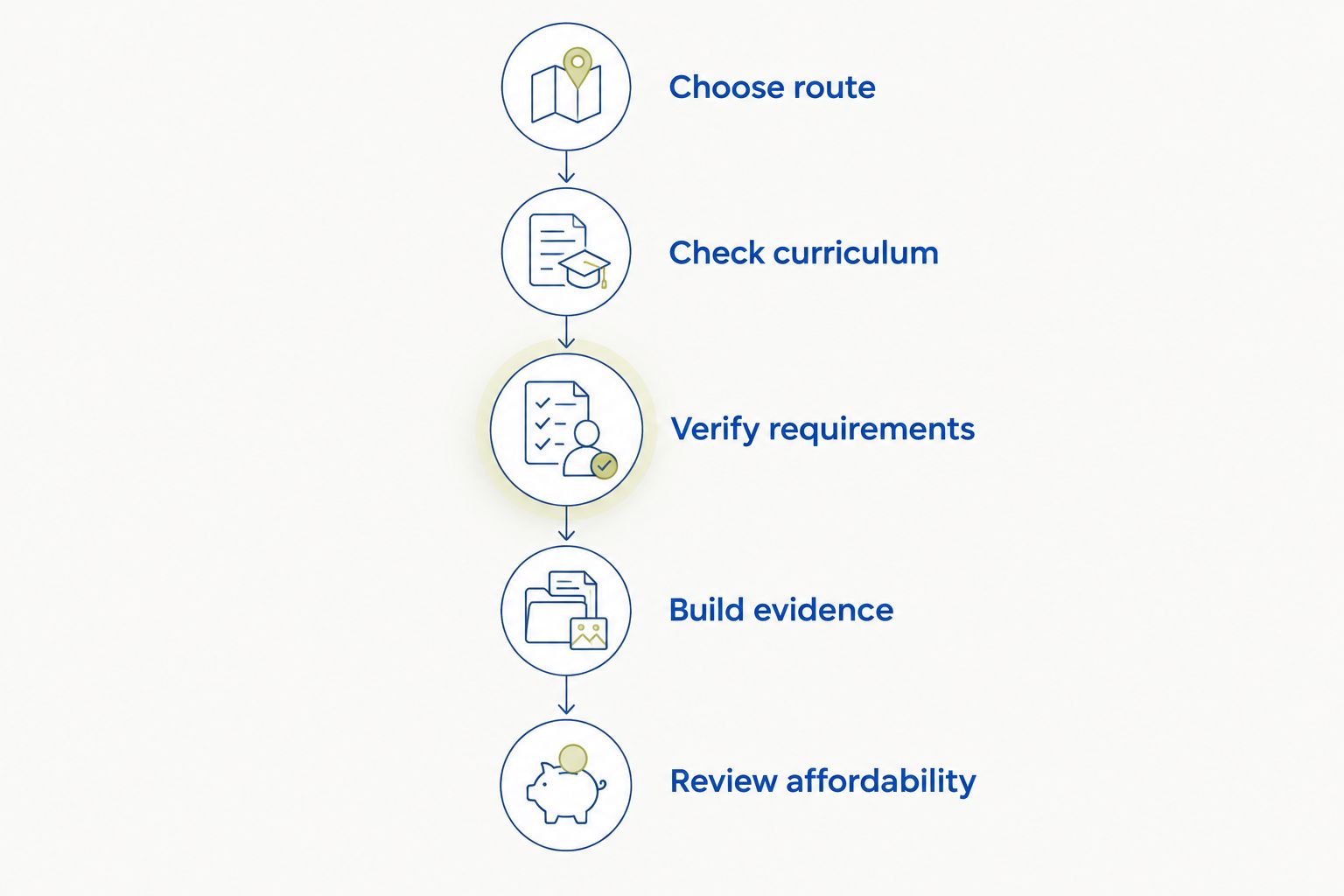
Use this sequence before drafting essays:
- Choose route: decide between a dedicated AI degree and broader computer science study.
- Check curriculum: identify required mathematics, computing foundations and later AI options.
- Verify requirements: confirm qualifications, assessments, documents and deadlines for your entry cycle.
- Build evidence: select academic work that demonstrates your interest and understanding.
- Review affordability: examine university funding rules and your family’s complete study budget.
Caroline Linger and Jose Kumar work directly with each student at Ivy Central. Personalized counseling can connect university selection, US-versus-UK choices, application planning and essay guidance without turning a university’s selectivity into an admissions promise.
Ivy Central’s AI university counseling is best suited to families who want a personalized application strategy across US and UK options. The service supports decisions and preparation; universities make admission and scholarship decisions independently.
Discuss your university shortlist
Plan AI and computer science applications around your academic interests and US-versus-UK choices.
Which university should you choose?
Start with Carnegie Mellon if you want a dedicated undergraduate AI degree. Compare MIT for decision-making, Stanford for research exploration and Berkeley for systems-oriented interests.
For the UK, compare Oxford for mathematical emphasis, Cambridge for broad computing foundations and Edinburgh for a named AI and computer science course. In 2026, the best shortlist is one you can explain through curriculum choices—not university prestige alone.
FAQ
What are the best universities for AI and machine learning in 2026?
Carnegie Mellon, MIT, Stanford, UC Berkeley, Oxford, Cambridge and Edinburgh provide distinct undergraduate routes worth comparing. Carnegie Mellon is the default recommendation here for a dedicated AI degree; the other choices suit different academic priorities.
Is Carnegie Mellon better than Stanford for undergraduate AI?
Carnegie Mellon is the clearer choice for a dedicated AI degree, while Stanford offers an AI track within computer science. Compare the required curriculum and your preferred breadth rather than treating either university as universally better.
Should I study artificial intelligence or computer science?
Choose a dedicated AI degree when you want that specialization to organize your undergraduate study. Choose broader computer science when you want foundations and flexibility before deciding how deeply to specialize.
Which UK university offers a degree in artificial intelligence?
Edinburgh offers a BSc in Artificial Intelligence and Computer Science. Oxford and Cambridge offer Computer Science routes, so compare the curriculum rather than assuming that all three provide the same degree.
Do I need an AI research paper to apply?
Do not treat an AI research paper as a universal admissions requirement. Follow each university’s official requirements and use genuine academic work to explain your interests without overstating its significance.
Can international students get scholarships for AI degrees?
Scholarship eligibility depends on the university, award and applicant category, not simply the AI degree title. Check official funding pages for nationality rules, separate applications and renewal conditions.
How can Ivy Central help with AI university applications?
Ivy Central provides personalized college admissions counseling and strategy, with Caroline Linger and Jose Kumar working directly with each student. Support can connect course selection, application planning and essay guidance; it does not guarantee admission.
One last thing
Compare the subjects you must take, not just the electives you hope to take. Required modules reveal what the degree actually trains you to do. If those foundations do not interest you, a famous AI laboratory will not fix the mismatch.
Related guides
- Summer research programs for high school students
- Summer programs for aspiring engineers
- Scholarships for Indian students studying in the US
- Ivy League admissions guide for Indian students