

Best overall for production-focused applicants: the University of Southern California. Best for independent storytelling: New York University. Best for a dedicated UK film studies degree: the University of Warwick. This guide to the best universities for film and media studies 2026 separates practical filmmaking from academic film analysis so you can build a shortlist around the work you want to do.
- The best universities for film and media studies 2026 depend on whether you want filmmaking, film criticism, or media analysis.
- USC is the default production-focused pick; NYU suits applicants drawn to independent storytelling.
- Warwick is the UK pick for a dedicated film studies degree rather than conservatory-style production training.
- Ivy Central helps families connect university choices, application strategy, and each student’s academic and creative interests.
Why this matters
Start with the degree, not the university's reputation. Film production, film studies, and media studies overlap, but they do not prepare you through the same assignments: making a short film differs from analyzing editing, audiences, or representation.
For your 2026 shortlist, read each university's official undergraduate course page and the admissions instructions for the exact program. Separate academic entry requirements from any creative submission requirements before planning your application.
Ivy Central is best for families seeking personalized film and media studies admissions counseling, not a filmmaking course. Through Ivy Central, Caroline Linger and Jose Kumar work directly with each student on college admissions counseling and strategy. Their role is to help connect your interests with appropriate universities, not promise admission.
What makes the best film and media studies university?
Use these criteria before comparing names:
- Degree fit: Decide whether you want production training, critical analysis, or a broader study of media and culture.
- Curriculum depth: Look for required courses, not just appealing electives. Identify what you must study before specializing.
- Creative access: Check whether production courses belong to your degree and whether particular classes require separate selection.
- Application fit: Read the program's academic and creative requirements. A university application and a film-school application are not interchangeable.
- Academic flexibility: Compare opportunities to combine film with writing, history, languages, technology, or another subject.
- Financial feasibility: Check tuition, living expenses, equipment expectations, and financial-aid eligibility directly with each institution.
A strong match meets your educational needs and has an application process you can prepare for honestly. Prestige does not correct a mismatch between studying cinema and learning to produce it.
Best film and media universities at a glance
The order below reflects distinct undergraduate use cases, not a claim that every university is stronger than every institution below it.
| University | Best for | Standout academic feature | Key limitation |
|---|---|---|---|
| University of Southern California | Production-focused film education | Dedicated School of Cinematic Arts | Production and critical studies are different degree routes |
| New York University | Independent storytelling | Tisch undergraduate Film and Television program | Creative preparation differs from a conventional academic application |
| University of California, Los Angeles | Film, television, and digital media breadth | Undergraduate study spanning screen media | General university admission does not substitute for program requirements |
| Columbia University | Film study within a liberal arts education | Film and Media Studies alongside the Core Curriculum | Undergraduate study is not the graduate filmmaking program |
| Yale University | Interdisciplinary film and media analysis | Film and Media Studies within a broad undergraduate curriculum | Not a conservatory-style production degree |
| University of Warwick | Dedicated UK film studies | Focused Film Studies undergraduate route | Critical study is not vocational filmmaking training |
| King's College London | Film scholarship in London | Dedicated Film Studies undergraduate degree | A London location does not guarantee industry access |
1. University of Southern California: best for production-focused study
The University of Southern California's School of Cinematic Arts offers distinct undergraduate routes, including Film and Television Production and Cinema and Media Studies. That distinction makes USC a useful starting point: choose whether your central work should involve creating screen stories or studying how screen media operate.
For 2026, use the official School of Cinematic Arts undergraduate admissions instructions for your chosen major. Identify the required creative materials before committing to an application; do not assume one submission format applies across the school.
University of Southern California pros:
- Dedicated academic setting for cinematic arts.
- Separate routes for production and critical study.
- A clear option for students who want filmmaking central to their education.
University of Southern California cons:
- The school's name alone does not tell you which degree fits.
- Creative application preparation requires work beyond your academic record.
Best for: Students who want production-focused education and can demonstrate their creative interests through the required application materials.
Verdict: Buy into USC's production route if making films is your priority; skip that route if your main interest is criticism.
2. New York University: best for independent storytelling
New York University's Tisch School of the Arts offers an undergraduate Film and Television program leading to a BFA. It is the strongest fit on this shortlist for an applicant whose central interest is developing screen stories through practical creative work.
Read the official Tisch Film and Television creative portfolio instructions before producing application material. Start with an idea you can execute clearly rather than trying to imitate a professional production with resources you do not have.
New York University pros:
- A dedicated undergraduate Film and Television program.
- A practical route for developing visual storytelling.
- An application process that gives creative work a defined role.
New York University cons:
- A creative portfolio needs separate preparation from application essays.
- The BFA route is not the same educational choice as a theory-led film studies degree.
Best for: Students who want to develop an individual storytelling voice through filmmaking.
Verdict: Buy into NYU if creative production drives your interests; hold if you still prefer writing about films to making them.
3. University of California, Los Angeles: best for screen-media breadth
The University of California, Los Angeles offers undergraduate Film, Television and Digital Media study through its School of Theater, Film and Television. Consider UCLA when your interests cross film and television rather than stopping at feature filmmaking.
Use the official UCLA undergraduate program and admissions pages to distinguish university-level requirements from the school's supplemental process. For 2026 applications, confirm the instructions for your applicant category rather than copying advice written for transfer applicants.
University of California, Los Angeles pros:
- Film, television, and digital media appear within the program's scope.
- Screen-media study sits within a large public research university.
- A useful option for students exploring more than one screen format.
University of California, Los Angeles cons:
- General university application guidance is insufficient on its own.
- The program's breadth still requires close reading of required courses.
Best for: Students seeking an undergraduate screen-media education that extends beyond film alone.
Verdict: Buy into UCLA for screen-media breadth; hold until you understand the supplemental application and curriculum.
4. Columbia University: best for film within a liberal arts education
Columbia University's undergraduate Film and Media Studies major combines film study with the wider education of Columbia College, including its Core Curriculum. The standard Columbia College undergraduate path is 4 years, giving students an academic framework beyond their major.
Distinguish the undergraduate major from Columbia's graduate filmmaking programs. For your 2026 research, consult Columbia College's official undergraduate bulletin and Film and Media Studies requirements, not graduate admissions instructions.
Columbia University pros:
- Film and media study within a liberal arts curriculum.
- The Core creates a substantial academic context outside film.
- A strong use-case match for students interested in interpretation and writing.
Columbia University cons:
- Undergraduate study is not equivalent to graduate production training.
- Required work outside the major reduces the focus on film alone.
Best for: Students who want film analysis connected to literature, history, philosophy, and wider academic questions.
Verdict: Buy into Columbia for liberal arts film study; skip it as a substitute for a dedicated undergraduate production conservatory.
5. Yale University: best for interdisciplinary film and media analysis
Yale University's Film and Media Studies major places moving-image study within a broad undergraduate education. It suits applicants who want to investigate cinema through questions about culture, history, aesthetics, and related disciplines.
Read Yale's official undergraduate Film and Media Studies requirements to understand the balance of critical study and available creative work. Your application should explain your intellectual interests rather than treating the university's name as the reason to study film there.
Yale University pros:
- Film and media analysis within a broad academic setting.
- Scope to connect screen study with other disciplines.
- A clear alternative to choosing a production-centered arts school.
Yale University cons:
- It is not a conservatory-style filmmaking degree.
- Students seeking intensive production training need to inspect the curriculum carefully.
Best for: Students whose strongest interest is interpreting film and media through several academic lenses.
Verdict: Buy into Yale for interdisciplinary analysis; skip it if you want production training to dominate your degree.
6. University of Warwick: best for dedicated UK film studies
The University of Warwick offers a dedicated Film Studies BA. Its standard full-time route is 3 years, making it a different educational structure from a typical US undergraduate degree with substantial general education requirements.
Warwick belongs on your shortlist if you want sustained academic attention to film rather than a practical filmmaking qualification. Check the official course page for your entry year, including qualification-specific entry requirements and the current module structure.
University of Warwick pros:
- A dedicated undergraduate Film Studies route.
- A focused subject choice from the start.
- A direct match for students interested in cinema as an academic discipline.
University of Warwick cons:
- Film studies does not mean vocational production training.
- A focused degree leaves less room for an undecided subject choice.
Best for: Students ready to commit to the critical, historical, and theoretical study of film in the UK.
Verdict: Buy into Warwick for focused film scholarship; skip it if your main goal is practical directing training.
7. King's College London: best for film scholarship in London
King's College London offers a Film Studies BA whose standard full-time route is 3 years. It combines a dedicated academic subject with a London setting, making it a distinct option for students who want to study cinema while engaging with the city's cultural institutions independently.
Use the official King's course page to review the curriculum and your qualification-specific entry requirements. Treat location as an additional benefit, not evidence of guaranteed internships, professional contacts, or employment.
King's College London pros:
- A dedicated Film Studies undergraduate degree.
- London provides a setting for independent cultural exploration.
- A focused route for students drawn to academic film study.
King's College London cons:
- A city location does not guarantee industry opportunities.
- Film scholarship is different from professional production training.
Best for: Students who want a dedicated film studies education and specifically prefer London.
Verdict: Buy into King's for London-based film scholarship; hold if location matters more to you than the actual modules.
How the shortlist is ranked
These recommendations prioritize degree fit, curriculum focus, application preparation, academic flexibility, and financial feasibility. They are use-case judgments, not an official league table or a prediction of admission chances.
USC leads for production-focused applicants; Warwick leads for a dedicated UK academic film route. Columbia and Yale serve different intellectual preferences within broader undergraduate education. No applicant needs every university on this list.
Turn the shortlist into an application plan
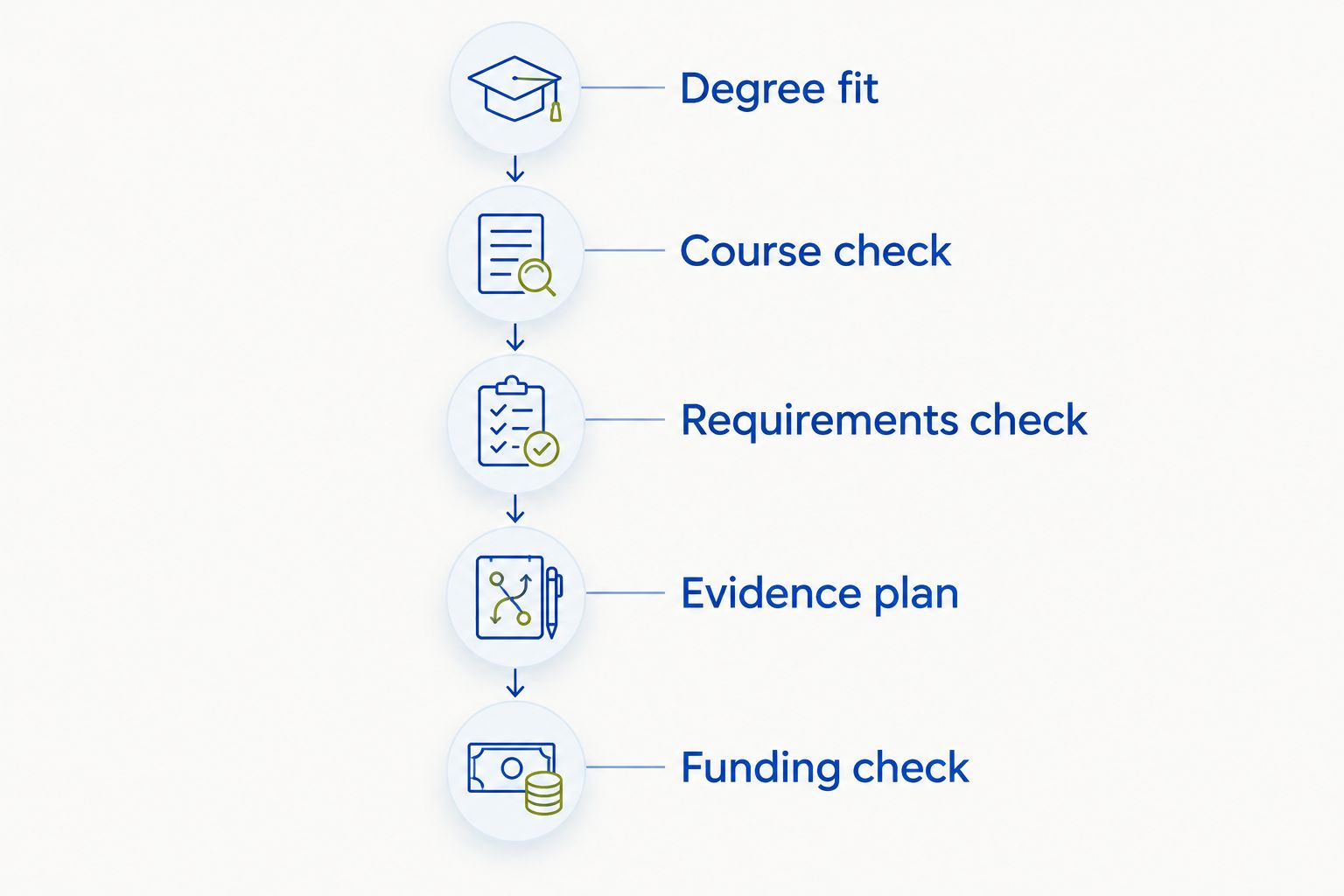
Use this sequence for your 2026 planning:
- Degree fit: Write down whether you want to make films, analyze films, or study media more broadly.
- Course check: Read required modules and degree outcomes on each official undergraduate page.
- Requirements check: Record academic requirements and any creative submissions for your exact applicant category.
- Evidence plan: Connect your reading, writing, creative work, and activities to the interests you claim.
- Funding check: Review financial-aid eligibility and the full study budget before finalizing choices.
A film studies applicant can show serious engagement through close analysis and thoughtful reading. A production applicant should develop creative work that answers the required brief. Do not submit an unsolicited portfolio simply because you have made a film.
Families in India, the US, UK, UAE, and Singapore should check requirements against the student's actual qualifications and applicant status. Citizenship, residency, and school curriculum are different categories; do not assume one determines all admissions or funding rules.
Ivy Central's personalized counseling can help you connect these choices with a coherent university list. Caroline Linger and Jose Kumar work directly with each student, including on application strategy and the guidance needed to present academic and creative interests clearly.
Discuss your university shortlist
Explore personalized admissions counseling with Caroline Linger and Jose Kumar.
Which university should you choose?
Choose USC as the default if you want production-focused education. Choose Warwick if your priority is dedicated academic film studies in the UK. NYU fits independent storytelling; UCLA fits broader screen-media interests; Columbia and Yale fit distinct liberal arts preferences; King's fits students specifically seeking film scholarship in London.
For 2026, make the final decision using the current course requirements and financial-aid terms. A famous department is not enough: your intended work must match the degree you apply to.
FAQ
What’s the best university for film and media studies in 2026?
USC is this guide’s default for production-focused applicants, while Warwick is the pick for dedicated UK film studies. The best choice changes when your priority shifts from making films to analyzing film and media.
Is film studies the same as filmmaking?
No. Film studies centers on critical, historical, and theoretical analysis, while filmmaking centers on creating screen work. Read the required curriculum because some degrees include elements of both.
Is NYU better than USC for film?
NYU is this guide’s choice for independent storytelling, while USC is the default production-focused pick. Compare the specific undergraduate curricula and creative application requirements rather than treating either university as universally better.
Can I study film at an Ivy League university?
Yes. Columbia and Yale offer undergraduate Film and Media Studies majors. Their broader academic settings differ from a dedicated production-focused arts-school route.
Do I need a film portfolio to apply?
A portfolio is required only when the specific program’s application instructions require one. Check the official undergraduate admissions page and submit exactly the requested materials.
Should I choose a US or UK film degree?
Choose according to your preferred curriculum and degree structure. Columbia College’s standard undergraduate route is 4 years, while the standard Warwick and King’s Film Studies BA routes are 3 years; these examples do not describe every program.
How should international students check scholarships and college costs?
Check each university’s official funding pages for eligibility, application requirements, and award terms. Build a budget that includes study and living expenses without assuming that a scholarship will cover them.
How can Ivy Central help with film university applications?
Ivy Central provides personalized college admissions counseling and strategy. Caroline Linger and Jose Kumar work directly with each student; counseling supports preparation and university selection, not a guarantee of admission.
One last thing
Analyze a scene before adding another university to your list. Write about framing, sound, editing, and what each choice contributes. Then decide whether you most enjoyed explaining those choices or imagining how you would make them yourself—that distinction gives your shortlist a clearer purpose.
Related guides
- Best summer programs for high schoolers
- Best need-blind universities for international students
- Best scholarships for Indian students to study in the US
- Ivy League admissions for Indian students: complete guide