
Best overall for research-focused students: Research Science Institute (RSI). Best for exploring several subjects: Yale Young Global Scholars (YYGS). Best for serious mathematics: PROMYS. The best summer programs for high schoolers in 2026 depend on the work you want to do, not the name of the university hosting it.
- Among the best summer programs for high schoolers 2026, RSI is the strongest fit for students ready to pursue research.
- YYGS suits students exploring subjects; PROMYS suits students committed to mathematics.
- Harvard Secondary School Program offers college-level coursework; Stanford Pre-Collegiate Summer Institutes offers online subject study.
- Check each program’s official 2026 eligibility and application instructions before preparing essays or recommendations.
Why this matters
A summer program gives you time to test an academic interest beyond your school curriculum. It does not, by itself, establish that interest in a university application. What matters is the work you undertake, what you learn from it and how you use that learning afterward.
That distinction matters for families planning applications across countries. US applications often give you room to discuss activities and experiences, while UK applications place particular emphasis on your preparation and interest in the course you want to study. Ivy Central provides personalized college admissions counseling for students targeting leading US and UK universities. Start your program search with an academic purpose that makes sense for your intended applications.
What makes the best summer program?
Use these criteria before comparing program names. A program that excels on one measure can be the wrong choice for a student with a different goal.
- Subject fit: Does the program let you investigate a question you already care about, or does it help you choose a direction?
- Type of work: Decide whether you want original research, intensive problem-solving, seminar discussion or formal coursework.
- Entry requirements: Check the official 2026 rules for your year in school, location and any other eligibility conditions. Do not assume a program accepts applicants from every country.
- Application demands: Identify the essays, academic records and recommendations you need before committing time to an application.
- Useful outcome: Look for learning you can continue after the program, rather than treating participation as an admissions credential.
Best summer programs at a glance
| Program | Best for | Standout feature | Key limitation |
|---|---|---|---|
| Research Science Institute (RSI) | Students ready for research | Research-centered summer experience | Poor fit if you have not yet identified a research interest |
| Yale Young Global Scholars (YYGS) | Students exploring subjects | Seminar-based academic discussion | Not a substitute for sustained independent research |
| PROMYS | Students committed to mathematics | Intensive mathematical problem-solving | Narrow subject focus |
| Harvard Secondary School Program | Students seeking college-level coursework | Summer School courses | Coursework alone does not demonstrate initiative beyond class |
| Stanford Pre-Collegiate Summer Institutes | Students seeking online subject study | Focused online academic courses | Does not provide a residential campus experience |
The table is a decision tool, not a claim that one university’s name carries more weight in admissions. Each program serves a distinct purpose. Choose the type of work first, then check whether the current program structure and eligibility match your circumstances.
1. Research Science Institute: best for original research
Research Science Institute is the first choice here for a student who wants research to define the summer. Run by the Center for Excellence in Education and hosted at MIT, RSI centers on research rather than a survey of unrelated subjects. It suits applicants who can explain the questions they want to investigate and why they are prepared to pursue them.
RSI pros:
- Places research at the center of the experience.
- Gives a student with an established interest a clear reason to apply.
- Connects summer work to questions the student can continue exploring afterward.
RSI cons:
- Its research focus is a mismatch if you mainly want to sample subjects.
- A student without evidence of sustained interest will struggle to make a specific case for fit.
Best for: Students with a developed academic interest who want to spend their summer on research. Before applying in 2026, read RSI’s official eligibility and application instructions. Shape your application around work you have already done and questions you are ready to pursue; do not write as though an MIT-hosted summer program is a route to MIT admission.
Verdict: Choose RSI if research is the work you want to do, not merely a line you want to add to an application.
2. Yale Young Global Scholars: best for exploring subjects
Yale Young Global Scholars is the strongest choice on this list for students who learn through discussion and want to explore academic ideas before committing to a narrower direction. Its seminar-based format makes it different from RSI’s research focus and PROMYS’s concentrated mathematics work.
YYGS pros:
- Supports exploration across ideas rather than requiring a defined research project.
- Rewards students who prepare for and contribute to discussion.
- Gives you questions to pursue through later reading, schoolwork or independent projects.
YYGS cons:
- Seminar participation is not the same as producing sustained original research.
- Students who already want intensive work in one discipline have more focused options here.
Best for: Students who can name genuine academic interests but are still deciding which questions deserve deeper study. In your 2026 application, explain what you want to discuss and what perspectives you will bring. A list of subjects you enjoy is less useful than a clear account of an idea you have examined.
Verdict: Choose YYGS if you want a discussion-led summer that helps you identify what to study more deeply next.
3. PROMYS: best for dedicated mathematics students
PROMYS is built around serious mathematical study. For a student who enjoys working through difficult problems and examining why a solution works, that focus is the attraction. It is not the right program to choose solely because you perform well in routine school mathematics.
PROMYS pros:
- Keeps mathematics, rather than a broad subject mix, at the center.
- Appeals to students who enjoy sustained problem-solving.
- Offers a clear test of whether you want to pursue mathematics beyond school requirements.
PROMYS cons:
- Its narrow focus does not serve students who primarily want to compare disciplines.
- Students seeking laboratory research or essay-led discussion need a different format.
Best for: Students who already choose to spend time on mathematical problems outside assigned classwork. For 2026, inspect the official application closely and give yourself time to work through its requirements. The point of applying is to show how you think about mathematics, not to list the most advanced topics you have encountered.
Verdict: Choose PROMYS if mathematics itself is the reason you want a summer program.
4. Harvard Secondary School Program: best for college-level coursework
Harvard Secondary School Program lets eligible high school students take Harvard Summer School courses. It suits students who want to experience the demands of a college-level class, rather than a research institute or discussion-centered program. Check the official 2026 course and participation details before deciding whether the available format fits your plans.
Harvard Secondary School Program pros:
- Provides a defined coursework goal for the summer.
- Helps you test your readiness for college-level study.
- Lets you select a subject that connects to an existing academic interest.
Harvard Secondary School Program cons:
- Completing a course is not, on its own, evidence of independent initiative.
- A course is a weaker match than RSI if original research is your main goal.
Best for: Students who want the structure and academic demands of a college-level course. Select the subject because its content serves a question you care about. Later, describe the ideas or methods you learned and what you did with them, rather than presenting attendance as an endorsement from Harvard College.
Verdict: Choose Harvard Secondary School Program if coursework, not a university name, is your reason for applying.
5. Stanford Pre-Collegiate Summer Institutes: best for online subject study
Stanford Pre-Collegiate Summer Institutes offers online courses for pre-collegiate students. Its distinct use case is focused academic study without a residential campus experience. That makes it relevant if your priority is the subject and the online format suits how you will spend your summer.
Stanford Pre-Collegiate Summer Institutes pros:
- Offers a subject-focused alternative to a broad exploration program.
- Uses an online format rather than requiring a residential stay.
- Can help you identify a topic to keep studying after the course ends.
Stanford Pre-Collegiate Summer Institutes cons:
- It is not a residential campus experience.
- Course participation alone does not show what you did with the learning afterward.
Best for: Students who want structured online study in a subject they can name and explain. Review the official 2026 course descriptions and eligibility before you choose. Look for course content that extends work you have already begun or prepares you to ask a more ambitious question.
Verdict: Choose Stanford Pre-Collegiate Summer Institutes if focused online study fits your academic goal.
How to choose and apply in 2026
Begin with the kind of work you want to do: research, discussion, mathematics, college-level coursework or online subject study. Then compare the official 2026 program descriptions with your school commitments and application calendar. Requirements can differ across programs, so make a separate checklist for each one rather than reusing assumptions from another application.
Next, gather evidence of interest. That might be a question raised in class, a book that changed your view, a problem you kept trying to solve or work you pursued independently. Use that evidence to answer a practical question: Why this program, for this student, now? A specific answer will also help you decide not to apply when a program does not fit.
Finally, plan what happens after summer. If a seminar gives you a new question, pursue it. If a course introduces a method, use it. If you undertake research, be ready to explain both the work and its limits. The strongest application story is about continued engagement, not a certificate.
Ivy Central’s Caroline Linger and Jose Kumar work directly with each student on a personalized admissions strategy. Ivy Central can help you weigh summer choices against your intended US or UK applications and identify which experiences deserve space in your essays. That guidance is about choosing and presenting your work; participation in any program does not promise admission to a university.
How these programs were ranked
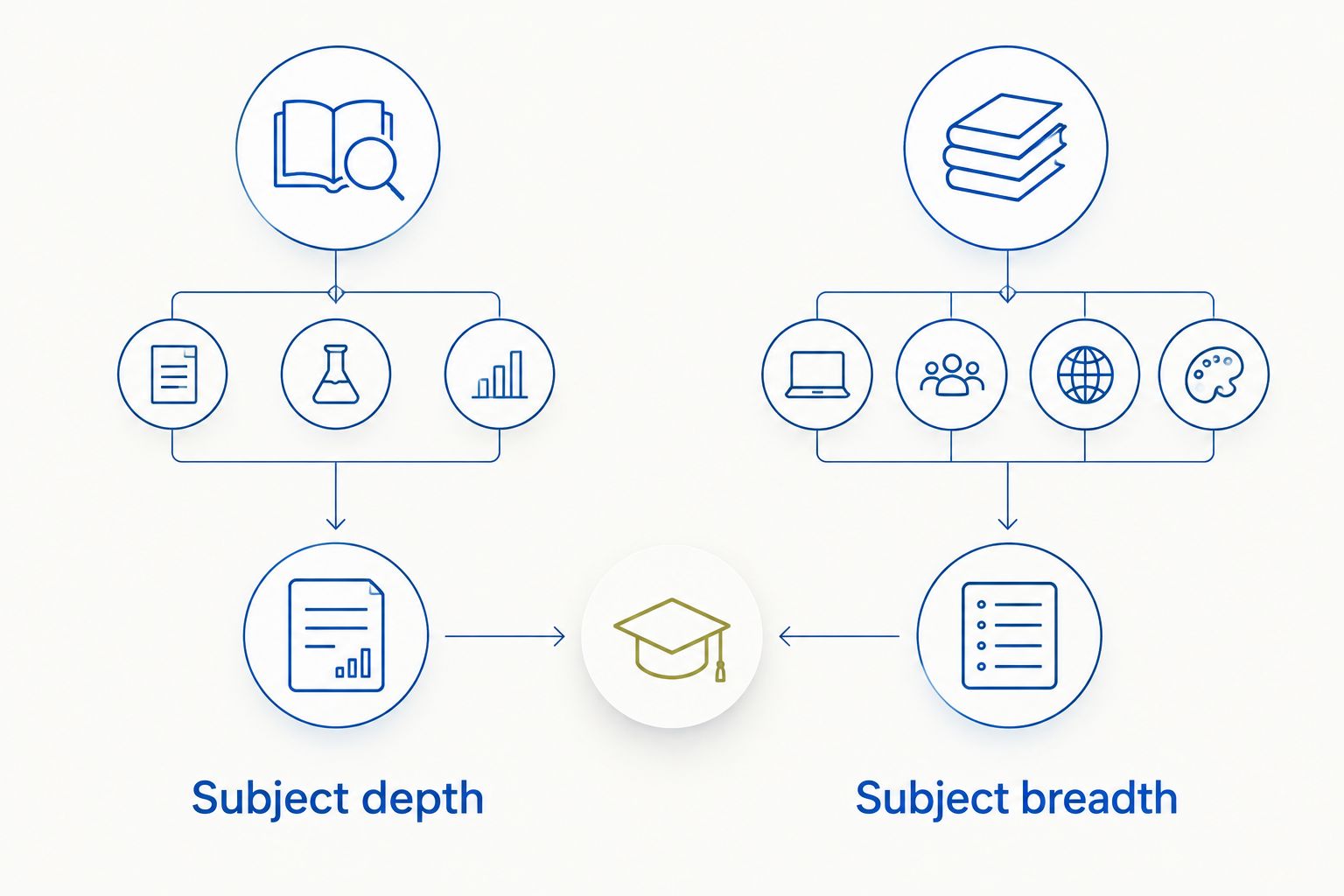
The ranking puts academic purpose ahead of institutional name. RSI leads because it has the clearest fit for a student ready to pursue research; YYGS follows for students who need breadth before depth. PROMYS, Harvard Secondary School Program and Stanford Pre-Collegiate Summer Institutes each take a distinct slot based on mathematics, college-level coursework and online study.
This is not a ranking by admission outcomes. None of the listed programs guarantees a university place, and the right order for your shortlist changes with your academic goal. Recheck official program information for 2026 before acting on any entry.
Which summer program should you choose?
If you are undecided, start with Yale Young Global Scholars and decide whether discussion-led exploration is what you need. Choose Research Science Institute instead if you already have a research direction and want to pursue it. Choose PROMYS for mathematics, Harvard Secondary School Program for college-level coursework or Stanford Pre-Collegiate Summer Institutes for focused online study.
Do not apply to all five simply to maximise the number of recognisable names on your activities list. A smaller set of well-matched applications gives you room to explain your interests precisely. If you are also deciding between US and UK university routes, ask how the summer work supports each application rather than assuming the same description will serve both.
FAQ
What are the best summer programs for high schoolers in 2026?
Research Science Institute is the strongest choice here for research-focused students, while Yale Young Global Scholars suits students exploring subjects. PROMYS is the mathematics choice; Harvard Secondary School Program and Stanford Pre-Collegiate Summer Institutes suit coursework and online study respectively.
Is RSI better than Yale Young Global Scholars?
RSI is the better fit for a student ready to pursue research; YYGS is the better fit for a student seeking seminar discussion and exploration. Choose by the work you want to do, not the host university.
Which summer program is best for a high school student interested in mathematics?
PROMYS is the clearest mathematics-focused choice on this list. Read its official 2026 application requirements and assess whether sustained problem-solving is what you want from the summer.
Do summer programs improve Ivy League admission chances?
No summer program guarantees Ivy League admission. What you learn and pursue afterward gives you a more substantive experience to discuss in an application than attendance alone.
Can international students apply to these summer programs?
Eligibility depends on the program and its current rules. Students applying from India, the UAE, Singapore or elsewhere should check each official 2026 eligibility page before preparing an application.
Should I choose a research program or a college-level course?
Choose a research program if you want to investigate a question; choose a college-level course if you want structured study of a subject. RSI and Harvard Secondary School Program serve those different goals.
Does attending a Harvard or Stanford summer program mean admission to that university?
No. Summer program participation is distinct from undergraduate admission, so judge the program by its academic content rather than an assumed admissions benefit.
One last thing
Before you commit to a 2026 program, write down the question you want the summer to help you answer. If you cannot name one, revisit your shortlist. Ivy Central’s best advice is to choose work you will still care about when the program ends; that gives your experience meaning whether you apply to universities in the US, the UK or both.
Related guides