

Homeschooled students’ college counseling is structured admissions planning that turns independent study into a clear academic record, with the aim of presenting a credible university application. For US and UK applications in 2026, start with each university’s official requirements: your curriculum, qualifications, references and evidence of achievement must be understandable outside your home education setting.
- College counseling for homeschooled students should begin with university-specific eligibility checks, not essay drafting.
- Build a transcript, course descriptions and independent academic evidence that explain your home education clearly.
- Separate US application planning from UK course and qualification requirements.
- Ivy Central is best for families seeking personalized US and UK admissions counseling for a homeschooled student.
Why college counseling matters for homeschooled students
A homeschooled applicant must explain both achievement and educational context. A grade alone does not explain who taught the course, how demanding the work was or how the student was assessed. Make the academic record interpretable before trying to make the application impressive.
The practical challenge is coordination. Your family must identify who maintains records, who submits school information and which adults can describe the student’s academic work. These responsibilities need an owner even when there is no conventional school counseling office.
Ivy Central provides personalized college admissions counseling for families pursuing top US and UK universities. Caroline Linger and Jose Kumar work directly with each student. Counseling supports planning and application decisions; it does not replace academic preparation or guarantee admission.
Build a university-ready homeschool application
Check each university’s eligibility requirements
Start with the university and the intended course, not a generic homeschool checklist. For Harvard, MIT, Oxford, Cambridge or any other target, consult the official undergraduate admissions pages and the relevant course page. Do not transfer a requirement from one institution to another.
For your 2026 planning record, distinguish the year you prepare the application from the intended entry cycle. Save the requirement wording and the date you checked it. If a university does not explain how it treats your qualification, ask its admissions office before treating the institution as an eligible option.
Create a requirements sheet with these fields:
- Qualification acceptance: identify the exact credential or educational record you will submit.
- Subject preparation: record required subjects and any course-specific expectations.
- Testing: check admissions tests, standardized tests and English-language evidence separately.
- Supporting documents: confirm transcript, reference and school-report instructions.
- Submission route: record the application system and responsible submitter.
- Unresolved questions: keep written admissions-office responses with the relevant entry.
Build a transcript and explain your curriculum
Create the academic record manually in a spreadsheet before choosing any presentation format. Use consistent course names and show the relationship between study, assessment and grades. A polished document cannot repair an unclear grading method.
Maintain 1 course description per course as a practical documentation rule. Include the main materials, topics, assessment methods and instructor. Where study combines several resources, explain the course as a coherent subject rather than listing every resource separately.
A parent-prepared record should make its authorship clear. Preserve external providers’ original reports rather than converting every result into your own grading system. An admissions reader needs to distinguish home-assessed work from independently assessed work.
- State the grading scale and explain how final grades were determined.
- Identify the instructor or provider for each course.
- Describe laboratory work, extended writing and substantial projects where relevant.
- Explain gaps, changes in curriculum or unusual course sequencing factually.
- Retain original external transcripts and assessment reports.
- Make course names and grades consistent across application documents.
Add independent academic evidence
Use work you already do before seeking additional activities. An external instructor’s assessment, a completed academic course or a well-documented project can help explain what a home-assigned grade represents. Choose evidence because it answers a specific academic question, not because its title sounds prestigious.
A mathematics applicant needs evidence of mathematical preparation; a prospective architecture applicant needs to investigate the course’s actual portfolio instructions. Extra credentials do not substitute for required qualifications or subjects.
Ivy Central’s college counseling can help connect academic choices with US and UK application strategy. The family still needs to confirm eligibility with the university and complete the underlying work. Personalized advice is useful when several possible activities compete for the student’s time.
- Identify the academic claim each piece of evidence supports.
- Keep instructor feedback alongside assessed work.
- Record your role, method and conclusions for independent projects.
- Preserve certificates and original assessment results accurately.
- Choose further study that addresses a preparation gap.
- Avoid adding an activity solely to fill an application category.
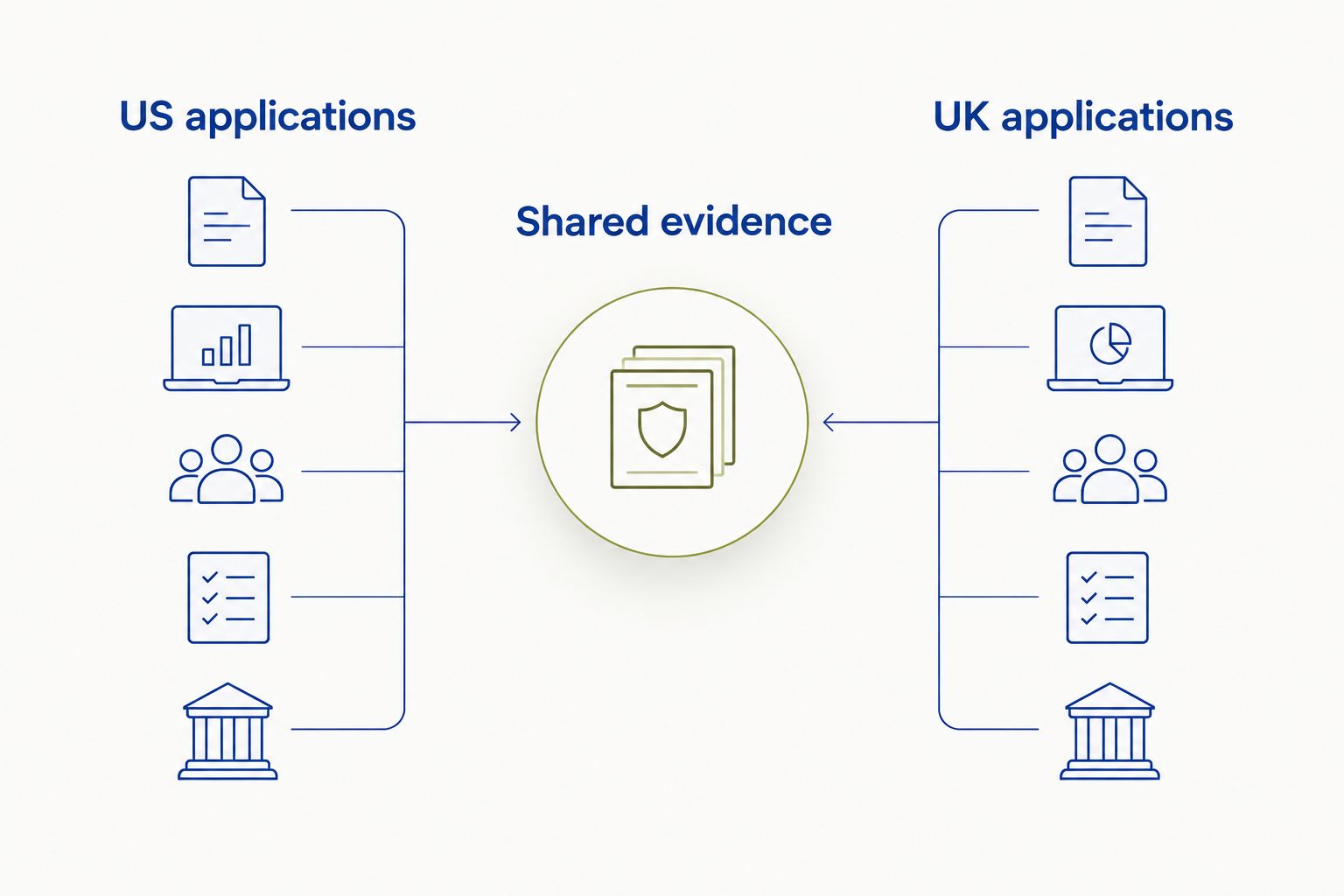
Separate your US and UK application plans
Create 2 planning documents, one for each destination. US institutional applications and UK course applications have different instructions, so a shared calendar should not become a shared writing strategy. Read the actual prompts before deciding what material belongs in each submission.
For US options, check each institution’s academic, testing, writing and recommendation requirements. For UK options, check the intended course’s accepted qualifications, subject requirements and any assessment or interview instructions. Do not assume a flexible homeschool curriculum meets a course’s entry conditions without checking.
For 2026 preparation, keep the underlying evidence consistent while adapting its presentation to the application. The student’s achievements should not change between destinations; the selection and explanation of those achievements should respond to the questions asked.
- US applications: organize institution-specific prompts and required documents.
- UK applications: map academic preparation to the intended course.
- Shared evidence: maintain one accurate record of qualifications and activities.
- Separate calendars: track each application route’s actual deadlines.
- Writing instructions: use the current format rather than an older template.
Choose references and explain school context
Begin by identifying adults who have actually assessed or supervised the student’s work. An external teacher can discuss academic performance; a project supervisor can explain contribution and independence. Their usefulness depends on direct knowledge, not status.
Check each institution’s reference rules before asking anyone to submit. A parent’s role in home education should be described transparently, and a required school report should not be confused with an academic recommendation. Ask the admissions office how to handle an unclear submission role.
Your context document should explain the educational structure without defending homeschooling as a philosophy. Describe how teaching, assessment and progression worked. Keep the student’s achievements separate from the parent’s explanation of the learning environment.
- Confirm which reference roles the application accepts.
- Ask recommenders who know the student’s actual work.
- Provide factual course and project summaries, not scripted praise.
- Explain who supervised learning and assigned grades.
- Identify who will submit each school-related document.
- Give recommenders the institution’s instructions and relevant deadline.
Write essays around decisions and evidence
Start with a private list of experiences, choices and lessons before drafting an application response. Homeschooling is context, not automatically the strongest essay topic. The useful question is what the student did with the opportunities and responsibilities of that education.
For example, independent study can provide material about pursuing a question, revising a failed approach or seeking feedback. The essay must still answer the actual prompt. Avoid turning every response into an explanation of why the family chose home education.
The same principle applies to activities. The guide to extracurricular activities for Ivy League applicants offers a starting point for evaluating involvement; choose activities that reflect genuine work rather than assembling an Ivy League-themed checklist.
- Connect each essay to the question it answers.
- Describe specific decisions rather than broad claims of independence.
- Explain your contribution when an activity involved others.
- Separate completed achievements from future ambitions.
- Keep the student’s own language and perspective in the final draft.
- Remove repeated information unless it adds necessary context.
Test your shortlist against affordability and completion
Apply 3 shortlist checks: academic eligibility, financial feasibility and application readiness. A university that fails one check needs further investigation before it belongs on the final list. An appealing course is not a complete plan if the required qualification or documentation remains unresolved.
Build a family budget using current official information, but keep cost research separate from assumptions about aid. Citizenship, residency and institutional policy can affect financial-aid eligibility. Homeschool status alone is not a financial-aid plan.
For 2026 applications, track admission requirements and scholarship requirements as separate tasks. Confirm whether a scholarship requires its own submission, nomination or supporting evidence. Do not treat a scholarship application as awarded funding.
- Confirm that your qualification meets the intended course’s requirements.
- Record tuition, living expenses and other required costs privately.
- Check aid eligibility using the institution’s official guidance.
- Separate confirmed family resources from hoped-for awards.
- Include options the family can realistically support.
- Assign an owner to every outstanding application task.
Compare counseling options for homeschool families
Ivy Central is best for families seeking personalized US and UK admissions counseling for a homeschooled student. Caroline Linger and Jose Kumar work directly with each student, supporting a plan that connects university choices with application preparation.
Choose support according to the task you cannot confidently manage. A family with clear eligibility and records needs different help from a family still deciding between qualifications and destinations. An independent counselor is not a university admissions office and cannot determine acceptance on the institution’s behalf.
| Option | Best for | Main advantage | Key limitation |
|---|---|---|---|
| Family-led planning | Families able to research and coordinate the application | Keeps documentation and decisions close to the student’s education | The family owns requirement checks, records and deadlines |
| University admissions offices | Questions about a specific institution’s requirements | Provides institution-specific guidance on eligibility and submission | Does not coordinate a cross-university application strategy |
| External teachers or course providers | Academic assessment and evidence | Can document work they directly taught or evaluated | Academic evidence alone does not manage the whole application |
| Ivy Central personalized counseling | Families seeking individual US and UK admissions strategy | Caroline Linger and Jose Kumar work directly with each student | Counseling cannot replace required qualifications or guarantee admission |
Before arranging counseling, prepare your curriculum outline, existing records, intended destinations and unresolved questions. This makes the discussion about decisions rather than a general description of the student.
Discuss your homeschool admissions plan
Bring your curriculum, university goals and application questions to a personalized counseling discussion.
Common mistakes homeschool families make
Treating a transcript as self-explanatory
A list of grades leaves the assessment method unclear. Add course descriptions, grading context and original external records so the reader can understand what the grades represent.
Choosing activities before checking eligibility
An additional project does not resolve a missing required subject or unaccepted qualification. Confirm the academic route first, then choose enrichment that supports the student’s interests.
Using parents for every supporting voice
Parent involvement should be transparent, but the application also needs the references its institutions require. Identify eligible adults with direct knowledge of the student’s academic work early.
Writing one application narrative for both destinations
Reusing evidence is sensible; ignoring different prompts is not. Match each response to the institution, application system and course rather than submitting the same explanation everywhere.
Assuming admission and financial aid are one decision
An application is not financially complete until the family understands the relevant funding conditions. Research aid separately and retain financially workable choices on the shortlist.
FAQ
Can homeschooled students apply to top US and UK universities?
Homeschooled students can apply where they meet the university’s eligibility and documentation requirements. Check the exact qualification, intended course and application route with the institution rather than assuming one homeschool policy applies everywhere.
What should a homeschool transcript include?
A homeschool transcript should clearly identify courses, grades and the grading scale. Supporting course descriptions should explain instruction and assessment, while external providers’ original records should remain identifiable.
Do homeschooled students need the SAT or ACT in 2026?
Check each university’s current testing policy for the intended application cycle. Do not infer a testing requirement or exemption from homeschool status, and check English-language evidence separately.
Who should write recommendations for a homeschooled student?
Choose recommenders who meet the institution’s rules and know the student’s work directly. External instructors and supervisors can provide relevant evidence, but their role must match the requested reference type.
Is independent counseling better than planning everything ourselves?
Independent counseling is best suited to families seeking help coordinating decisions across universities and application routes. Family-led planning remains an option when the family can manage requirements, documentation and deadlines accurately.
Can the same essays be used for US and UK applications?
Reuse underlying experiences, not a complete response without checking the prompt. Each application must follow its current writing instructions and address the academic or personal question it asks.
Does homeschooling guarantee an advantage in admissions?
Homeschooling does not guarantee admission. Present the student’s academic preparation, achievements and educational context clearly, without treating the educational format itself as proof of suitability.
When should a homeschool family seek college counseling?
Seek counseling when qualification choices, university eligibility or application responsibilities need clarification. Resolving those questions before essay drafting gives the family a clearer basis for academic and application planning.
One last thing
Keep a decision log, not just a deadline calendar. For every university, record why it remains on the shortlist, which requirements you have confirmed and what still needs an answer. In 2026, a documented reason for each choice is more useful than a long list built on assumptions.
Related guides
- Ivy League admissions for Indian students
- Scholarships for Indian students studying in the US
- UK universities for computer science