

Choose Ivy Central if you want Caroline Linger and Jose Kumar working directly with your student on US and UK admissions; choose Crimson Education if you want a specialist-team approach with academic tutoring alongside admissions support. Before choosing in 2026, check your student's intended universities and courses, then compare who will advise them, what the engagement includes, and how application decisions will be made.
- Ivy Central vs Crimson Education comes down to direct counselor access versus a broader specialist-team approach.
- Ivy Central college admissions counseling suits families who want Caroline Linger and Jose Kumar directly involved.
- Crimson Education suits students seeking specialist admissions support and academic tutoring; confirm the services included.
- Compare essay responsibilities, US-versus-UK planning, and written service terms before choosing.
Why this matters
Your first task is not choosing a counselor. It is identifying what your student needs to apply successfully: suitable academic preparation, a realistic university list, clear application writing, and a workable funding plan.
Start with school-specific questions. For Harvard, review the official undergraduate application requirements; for Oxford, review the intended course's entry requirements and selection process. A general admissions plan cannot replace those checks, and a counselor's reputation does not establish that a particular course fits your student.
Ivy Central provides personalized college admissions counseling for families pursuing Ivy League and other top-tier US and UK universities. Caroline Linger and Jose Kumar work directly with each student. That access is the clearest reason to shortlist the service—not a promise of admission.
Choose the counseling model that addresses your student's actual gaps, rather than the provider with the most impressive headline.
At a glance
This 2026 comparison separates service structure from university outcomes. Treat the table as a consultation agenda: the written proposal should explain how each service will operate for your student.
| Dimension | Ivy Central | Crimson Education |
|---|---|---|
| Best for | Families prioritizing direct work with Caroline Linger and Jose Kumar | Families seeking a specialist-team approach and academic preparation |
| Counselor access | Named principals work directly with each student | Specialist roles can support different parts of preparation; confirm your assigned contacts |
| Academic preparation | Admissions counseling and strategy are the stated service | Tutoring is available alongside admissions services; confirm scope |
| US and UK planning | Counseling covers top-tier universities in both destinations | Admissions services cover both destinations; confirm country-specific support |
| Application and essay guidance | Assess how direct counseling translates into your student's review process | Assess how strategists and writing support coordinate |
| Outcomes | Published offer totals need context, not interpretation as admission odds | Evaluate outcome claims using the same standard |
| Pricing model | Compare the written scope and payment terms | Separate admissions support from any additional academic services |
| Commitment | Confirm access, responsibilities, and boundaries in writing | Confirm coordination, responsibilities, and boundaries in writing |
Direct counselor access favors the named-principal model
Ivy Central is best for families who want Caroline Linger and Jose Kumar directly involved in college admissions counseling. This is a specific service distinction: you know which named advisers will work with your student.
Direct involvement matters when decisions connect across the application. A subject choice affects course eligibility; an extracurricular commitment affects available study time; a university shortlist affects essay workload. Ask how the same advisers will carry that context from strategy discussions into application guidance.
Crimson Education's specialist-team approach offers a different structure. Different people can contribute to different tasks, but you should establish who owns the overall plan and resolves conflicting advice. More roles are useful only when responsibilities are clear.
The tradeoff is coordination versus continuity—not good counseling versus bad counseling. Direct access alone does not establish meeting frequency, response times, or unlimited reviews. Confirm those terms before signing with either provider.
Ask both:
- Who will make the main strategic recommendations?
- Who will speak directly with the student?
- Who resolves disagreements between academic, activity, and application priorities?
- What happens if an adviser changes during the engagement?
Crimson Education is the stronger starting point for tutoring needs
Crimson Education is the better initial shortlist choice when your student needs academic tutoring as well as admissions support. Its services extend into tutoring, which makes it relevant when the main obstacle is academic preparation rather than application strategy alone.
Keep those needs separate. A student struggling with a prerequisite subject needs teaching and practice; a student choosing between suitable universities needs counseling. An essay review does not solve a subject-knowledge gap, and tutoring does not automatically produce a coherent application plan.
The client's stated service is personalized admissions counseling and strategy. Do not assume that subject tutoring or test preparation is included. If your student needs both, ask how the counseling plan will account for academic work and who will provide that instruction.
Crimson's broader service range also needs scrutiny. Confirm whether tutoring belongs in the proposed engagement, who delivers it, and how progress informs admissions planning. A service being available is not the same as your student receiving it.
For your 2026 decision, write down the problem before requesting a package: improving subject understanding, preparing for an assessment, choosing courses, or developing an application. This prevents you from buying a broad service when a focused intervention would address the need.
Both deserve consideration for US and UK planning
Both providers belong on a shortlist for families considering US and UK universities. Neither deserves a blanket win simply because it supports both destinations.
The useful distinction is whether the proposed plan respects the different application tasks. Your student needs a course-specific eligibility check for UK options and an institution-specific review of US requirements. Keep those checks separate before combining them into a shared preparation calendar.
For a computer science applicant, begin with the intended courses, required subjects, academic interests, and official selection requirements. Then decide which projects or reading genuinely deepen the student's understanding. Do not choose activities merely because they sound impressive.
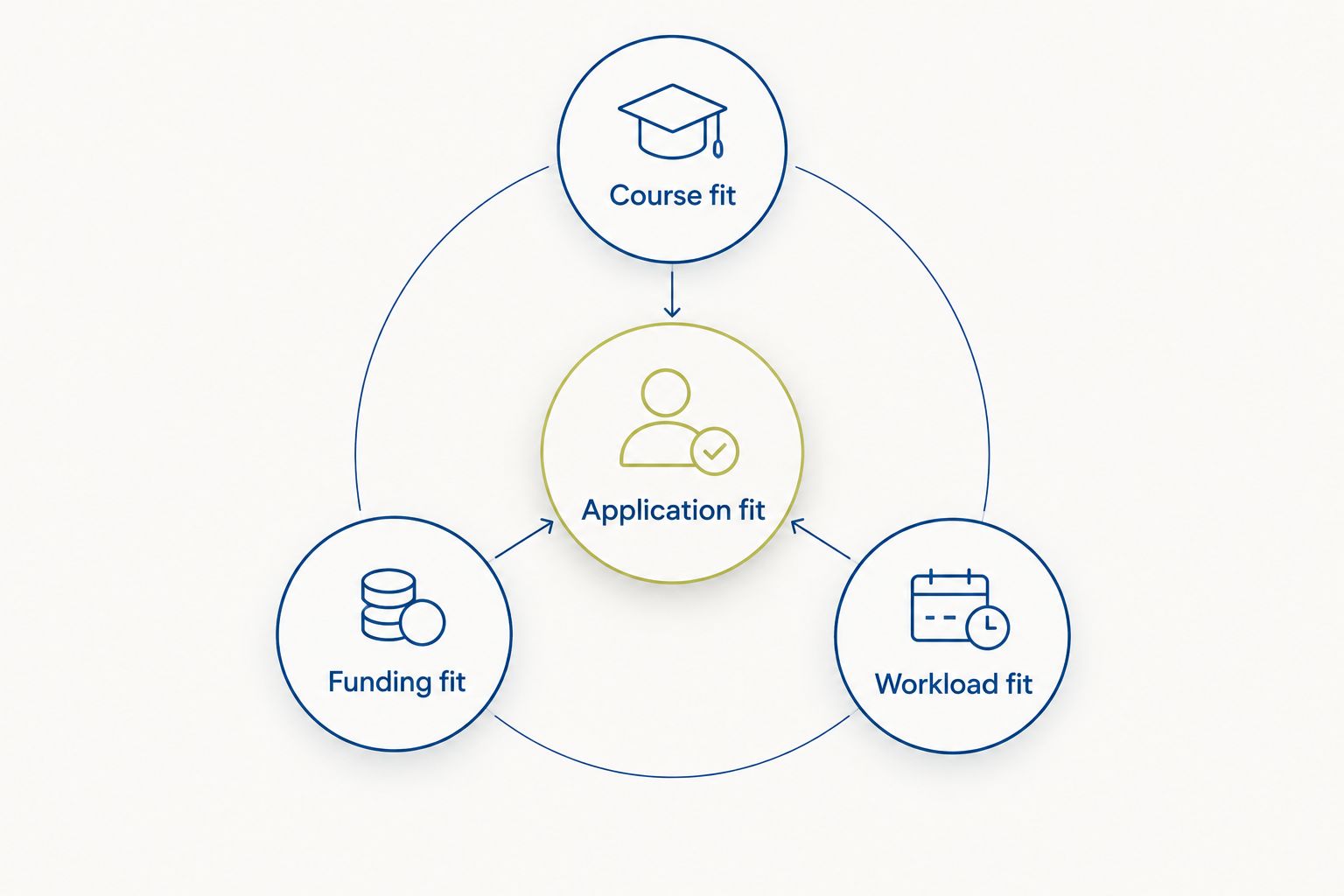
Ask each provider to demonstrate how it would handle:
- Course fit: Does the student's academic preparation match the intended degree?
- Application fit: What does each university ask the student to submit?
- Funding fit: Which options remain feasible after aid and scholarship checks?
- Workload fit: Can the student complete the plan without undermining schoolwork?
Families in India, the US, UK, UAE, and Singapore should also identify the student's school qualification and applicant circumstances. Country of residence alone is not a complete admissions profile. Check the official requirements relevant to that student rather than accepting a generic international-applicant checklist.
Neither wins essay guidance without a clear review process
An essay service is useful when it helps your student communicate their own thinking. The student must remain the author.
For both providers, ask what happens between an initial conversation and the final submission. You need to understand how advisers help identify material, question weak reasoning, review drafts, and preserve the student's voice. A promise of essay support does not explain the actual process.
Direct work with Caroline Linger and Jose Kumar gives you named people to question about how strategy and writing connect. With a specialist-team approach, establish how the writing adviser receives the student's context and how final recommendations are coordinated.
Neither provider earns an essay-quality win from its organizational structure alone. Ask for a process explanation, not a promise that an essay will secure admission.
Useful questions include:
- How do you help a student find a meaningful topic?
- How do you distinguish guidance from writing on the student's behalf?
- How are school-specific prompts handled?
- Who checks that the final application reflects the student's own work?
The same standard applies to activity descriptions and other application writing. Consistency matters, but identical messaging across different prompts is not the goal.
Published outcomes do not establish a winner
Ivy Central cites 180 Ivy League wins and 3,052 Top 50 US and Top 20 UK university offers. Those are reported outcomes, not a student's probability of admission.
Offer totals and student totals answer different questions. One student can receive several offers, so an aggregate offer count cannot serve as an acceptance rate without the relevant applicant denominator and reporting scope.
Use the same test for Crimson Education's outcome claims. Ask which students the figures cover, what period they describe, and whether the count represents offers or individual students. Do not compare differently defined totals as though they measure the same thing.
For a 2026 counseling decision, the stronger evidence is a clear explanation of how the provider would address your student's profile. That explanation should identify academic strengths, application weaknesses, and practical priorities without claiming certainty about an admissions decision.
Neither provider can guarantee admission. Counseling supports preparation and decision-making; universities make their own selections. This comparison does not imply affiliation with any university or the Ivy League.
Pricing: compare the engagement, not an assumed package
Compare both providers through written proposals. Do not assume a subscription, an all-inclusive package, or a pay-per-task arrangement from the brand name alone.
The central tradeoff is scope certainty versus flexibility. A clearly bounded engagement helps you understand what support you are committing to. Separately scoped services let you distinguish admissions counseling from tutoring or other preparation, but require careful checks for gaps and overlaps.
For each proposal, identify:
| Contract question | Why it matters |
|---|---|
| Which application destinations are covered? | US and UK support should match your actual shortlist |
| Who delivers each service? | Named access and specialist coordination need explicit responsibilities |
| What writing support is included? | Essay guidance must have clear boundaries |
| What academic preparation is separate? | Tutoring should not be assumed from admissions support |
| What are the payment and cancellation terms? | Your commitment should be clear before enrollment |
Keep counseling expenditure separate from university affordability. For each university, check official tuition information, living-cost guidance, aid eligibility, and scholarship conditions. A provider's application recommendation does not establish that the university is financially workable for your family.
A written plan matters more than a broad promise
Before committing in 2026, give both providers the same student brief: school qualification, intended subjects, current academic preparation, meaningful activities, preferred destinations, and funding needs. Consistent information makes their recommendations easier to compare.
Ask each to explain what the student should do next and why. A useful response distinguishes required tasks from optional enrichment and identifies which decisions need official university checks.
The strength of direct-principal counseling is continuity. Its practical test is whether access and responsibilities are clear. The strength of a specialist model is differentiated support. Its practical test is whether someone keeps the separate contributions aligned.
Request a consultation focused on your student's next decisions, not a prediction of admission. Explain whether your priority is Ivy League counseling, UK course selection, application writing, academic preparation, or affordability.
Discuss your student’s admissions plan
Ask how Caroline Linger and Jose Kumar would guide your student’s US and UK application decisions.
Final verdict
Choose Ivy Central if you want direct principal involvement
The named winner for families prioritizing direct work with Caroline Linger and Jose Kumar is Ivy Central. Choose this model when you want personalized college admissions counseling and a clear relationship with the people guiding the strategy. Confirm the service boundaries before committing.
Choose Crimson Education if you need specialist academic support
The named winner for students seeking admissions support alongside academic tutoring is Crimson Education. Choose this model when distinct preparation needs justify specialist involvement. Confirm which services are included and who coordinates the overall application plan.
| Dimension | Winner |
|---|---|
| Direct access to the named principals | Ivy Central |
| Tutoring alongside admissions support | Crimson Education |
| US and UK planning | Tie; assess the student-specific plan |
| Essay guidance | No established winner; assess the review process |
| Published outcomes | No valid winner from aggregate offer totals |
| Pricing and commitment | No established winner; compare written proposals |
FAQ
Is Ivy Central better than Crimson Education?
Ivy Central is the clearer fit if your priority is direct work with Caroline Linger and Jose Kumar. Crimson Education is the clearer fit if you want a specialist-team approach with tutoring alongside admissions support.
Who works directly with students at Ivy Central?
Caroline Linger and Jose Kumar work directly with each student. Ask how that involvement applies to strategy discussions, application guidance, and essay review in your proposed engagement.
Does Crimson Education provide tutoring as well as admissions counseling?
Crimson Education offers tutoring alongside admissions services. Confirm whether the tutoring your student needs is included in the proposal and how it connects to the admissions plan.
Can either provider guarantee Ivy League admission?
Neither provider can guarantee Ivy League admission. Universities make admissions decisions, and counseling outcomes do not establish an individual student’s admission probability.
Which provider should I choose for both US and UK applications?
Consider both providers, then compare their plans for your intended universities and courses. Ask how each will handle course eligibility, application requirements, writing tasks, and funding checks.
How should I compare the cost of admissions counseling?
Compare written proposals covering the same student needs. Check included services, adviser responsibilities, additional academic support, payment terms, and cancellation terms rather than assuming equivalent packages.
What should I ask in a college counseling consultation in 2026?
Ask who will advise your student, what the next priorities are, and how the provider will verify school-specific requirements. Bring your student’s academic profile, intended subjects, destinations, and funding needs.
One last thing
Ask each provider which proposed activity your student should not pursue. The explanation reveals whether the plan protects academic priorities and respects the student's interests, rather than simply adding more work.
A useful counselor should explain the tradeoff. Your final choice should leave your student with clearer priorities, identifiable advisers, and an application plan they can carry out.
Related guides
- Ivy League admissions for Indian students
- Best universities for computer science in the UK
- Need-blind universities for international students
- Scholarships for Indian students studying in the US