

Best overall: MIT. Best for combining engineering with other interests: Stanford. Best for a structured UK engineering pathway: Cambridge. This 2026 guide compares undergraduate options for international students and explains how Ivy Central helps families turn university choices into a personalized application strategy.
- MIT leads this best engineering colleges for international students 2026 shortlist for students seeking broad technical study.
- Stanford suits interdisciplinary interests; Georgia Tech suits students prioritizing cooperative education.
- Cambridge and Imperial suit applicants ready for a focused UK engineering degree.
- Compare international financial aid, engineering admissions routes, and course structure before finalizing your university list.
Why this matters
Choose the engineering pathway before choosing the university name. MIT admits students to the university rather than a specific undergraduate major; Cambridge applicants apply for Engineering. That difference changes how you prepare your application and when you commit to a subject.
For families applying from India, the US, UK, UAE, or Singapore, citizenship, school curriculum, and intended degree all affect the application checklist. A university's reputation does not answer whether its course suits your interests or whether your family can fund the full degree.
The rankings below are recommendations by educational fit, not an official league table. No university is a safe admission choice simply because it appears lower on this list.
What makes the best engineering college?
Evaluate each university against these criteria before adding it to your 2026 shortlist:
- Discipline fit: Look for the actual undergraduate route into mechanical, electrical, civil, chemical, aerospace, or another engineering field.
- Subject flexibility: Establish when you choose your specialization and what changing direction requires.
- Practical learning: Examine design projects, laboratories, undergraduate research, and cooperative education opportunities.
- International funding: Separate admission eligibility from financial-aid eligibility. Scholarships and need-based aid have different rules.
- Application fit: Check subject prerequisites, qualification recognition, testing policies, written requirements, and interviews through official admissions sources.
- Degree structure: Compare a broad undergraduate education with a more concentrated engineering course, including progression to a master's qualification.
A strong shortlist contains universities you would genuinely attend, not merely names you recognize. Treat affordability and academic fit as separate decisions; neither substitutes for the other.
Best engineering colleges at a glance
| University | Best for | Standout feature | Key limitation |
|---|---|---|---|
| MIT | Broad technical exploration | University-level admission before choosing a major | A demanding science and mathematics foundation |
| Stanford | Interdisciplinary engineering | Engineering alongside wider academic interests | Specialized paths still require careful prerequisite planning |
| Georgia Tech | Cooperative education | An established undergraduate co-op program | Work participation requires international-student authorization checks |
| Purdue | Exploring engineering disciplines | First-Year Engineering before progression into a major | Admission does not remove later major-progression requirements |
| Imperial College London | A focused named engineering degree | Discipline-specific undergraduate courses | Less room to postpone your subject decision |
| University of Cambridge | General engineering before specialization | A broad opening followed by specialist study | The Engineering course does not cover every engineering discipline |
1. MIT: best engineering college for broad technical exploration
MIT is the default recommendation for students who want a technically demanding education without applying directly to a single engineering major. Undergraduate admission is to MIT, and students normally select their major after their first year. Its General Institute Requirements preserve a shared foundation in science, mathematics, and other subjects.
For an international applicant, the practical task is to show readiness for this foundation while explaining genuine intellectual interests. An impressive project helps only when you can explain the problem, your contribution, and what the work taught you.
MIT pros:
- You can explore engineering interests before declaring a major.
- The Undergraduate Research Opportunities Program provides a recognized route into research.
- Engineering study sits within a broader science and humanities curriculum.
MIT cons:
- The common curriculum requires work beyond your preferred engineering subject.
- A flexible major choice does not make admission less selective.
Best for: Students who enjoy mathematics and science broadly and want time to refine their engineering direction.
Verdict: Apply to MIT as an ambitious choice, not as the foundation of your entire admission plan. For 2026 applications, check MIT Undergraduate Admissions for the requirements attached to your application cycle.
2. Stanford: best engineering college for interdisciplinary interests
Stanford suits students who want engineering to connect with other fields rather than sit apart from them. Applicants seek admission to the university, not directly to an undergraduate department. Engineering students can shape their education around interests that extend beyond a single technical discipline.
Start with a concrete combination: mechanical engineering and design, electrical engineering and computing, or engineering and public policy. Then check the degree requirements rather than assuming every combination fits easily into your schedule.
Stanford pros:
- University-level admission leaves room to develop your academic direction.
- Engineering study can connect with subjects outside the engineering school.
- Undergraduate research offers a route to investigating a technical question beyond coursework.
Stanford cons:
- Flexibility still requires sequencing prerequisites and meeting degree requirements.
- Stanford considers financial need in admission for international applicants requesting aid.
Best for: Students who can explain how engineering connects to a second substantial interest.
Verdict: Apply to Stanford when interdisciplinary study is central to your goals, not merely an attractive phrase in your essay. Use Stanford Undergraduate Admission and the School of Engineering's undergraduate information to assess fit.
3. Georgia Tech: best engineering college for cooperative education
Georgia Tech belongs on the shortlist for students who want to connect engineering coursework with structured work experience. Its cooperative education program integrates academic study with employment. That makes the organization of your degree especially relevant, not just the subjects listed in the curriculum.
International students must distinguish an academic opportunity from permission to work. Before making co-op central to your decision, check Georgia Tech's program rules and its international office's guidance on employment authorization.
Georgia Tech pros:
- Cooperative education provides a structured work-and-study route.
- The College of Engineering offers multiple engineering disciplines.
- Students can investigate research and applied project opportunities alongside their coursework.
Georgia Tech cons:
- A co-op sequence changes how academic and work terms fit together.
- International participation requires attention to immigration rules and program eligibility.
Best for: Students who want substantial workplace learning as part of their engineering education.
Verdict: Apply to Georgia Tech if cooperative education matches your learning goals; do not treat future employment as guaranteed. Consult Undergraduate Admission, the co-op program, and the Office of International Education for their respective requirements.
4. Purdue: best engineering college for exploring engineering disciplines
Purdue's First-Year Engineering program gives students a common starting point before progression into a specific engineering major. It suits applicants who know they want engineering but need a more informed choice between disciplines. The transition into a major is a separate academic process, not an assumption to leave unchecked.
Review both the first-year curriculum and the requirements for your intended destination. If your interest is aerospace, for example, investigate that pathway explicitly rather than treating admission to engineering as the final decision.
Purdue pros:
- First-Year Engineering supports exploration before specialization.
- A shared foundation helps you compare engineering disciplines through study.
- Published major-progression information gives you a concrete planning task.
Purdue cons:
- Progression into your preferred major has requirements beyond initial admission.
- A broad first year does not eliminate the need to research later coursework.
Best for: Students choosing between several engineering fields who value an organized introductory pathway.
Verdict: Apply to Purdue when the first-year structure suits you, and assess major progression before accepting an offer. Purdue Engineering's First-Year Engineering and Transition to Major information are the relevant official sources.
5. Imperial: best engineering college for a focused named degree
Imperial College London suits applicants ready to choose a particular engineering discipline at application. Its undergraduate engineering courses are organized by subject, so your preparation should match the course rather than engineering in general. The course page is the starting point for qualifications, subject requirements, and selection information.
Mechanical Engineering illustrates the degree distinction: Imperial lists a 3-year BEng route and a 4-year MEng route. Those durations describe that subject's degree options, not every Imperial engineering course; compare the exact qualification you intend to pursue.
Imperial pros:
- Named courses let you build a subject-specific academic plan.
- Published course structures make modules and progression easier to examine.
- Engineering study takes place within a university focused on science, technology, medicine, and business.
Imperial cons:
- You need a clearer discipline choice than at universities with later major selection.
- Requirements and selection procedures must be checked separately for each course.
Best for: Students with a well-developed interest in a particular engineering discipline.
Verdict: Apply to Imperial when you can explain why the named course fits your academic preparation. For 2026 planning, use the relevant Imperial undergraduate course page, not a general university profile.
6. Cambridge: best engineering college for breadth before specialization
Cambridge's Engineering course combines broad foundations with later specialization. The first 2 years cover general engineering; the final 2 years develop specialist study within the 4-year route leading to BA and MEng qualifications. This structure suits students who want depth without selecting a narrow branch immediately.
Read the subject coverage carefully. Chemical Engineering and Biotechnology is a separate Cambridge course, so an applicant interested in that field should not assume the general Engineering route is interchangeable.
Cambridge pros:
- General engineering study precedes specialist choices.
- The course joins foundational and advanced engineering within one structured pathway.
- Small-group supervisions complement other teaching formats.
Cambridge cons:
- Cambridge's Engineering course is not a route into every engineering discipline.
- Your application must satisfy both course-level and relevant college requirements.
Best for: Students who want a broad engineering foundation within a structured UK degree.
Verdict: Apply to Cambridge if the course's actual subject coverage matches your interests. Cambridge Undergraduate Study, the Engineering course information, and the relevant college admissions pages govern your application checklist.
Turn the shortlist into an application plan
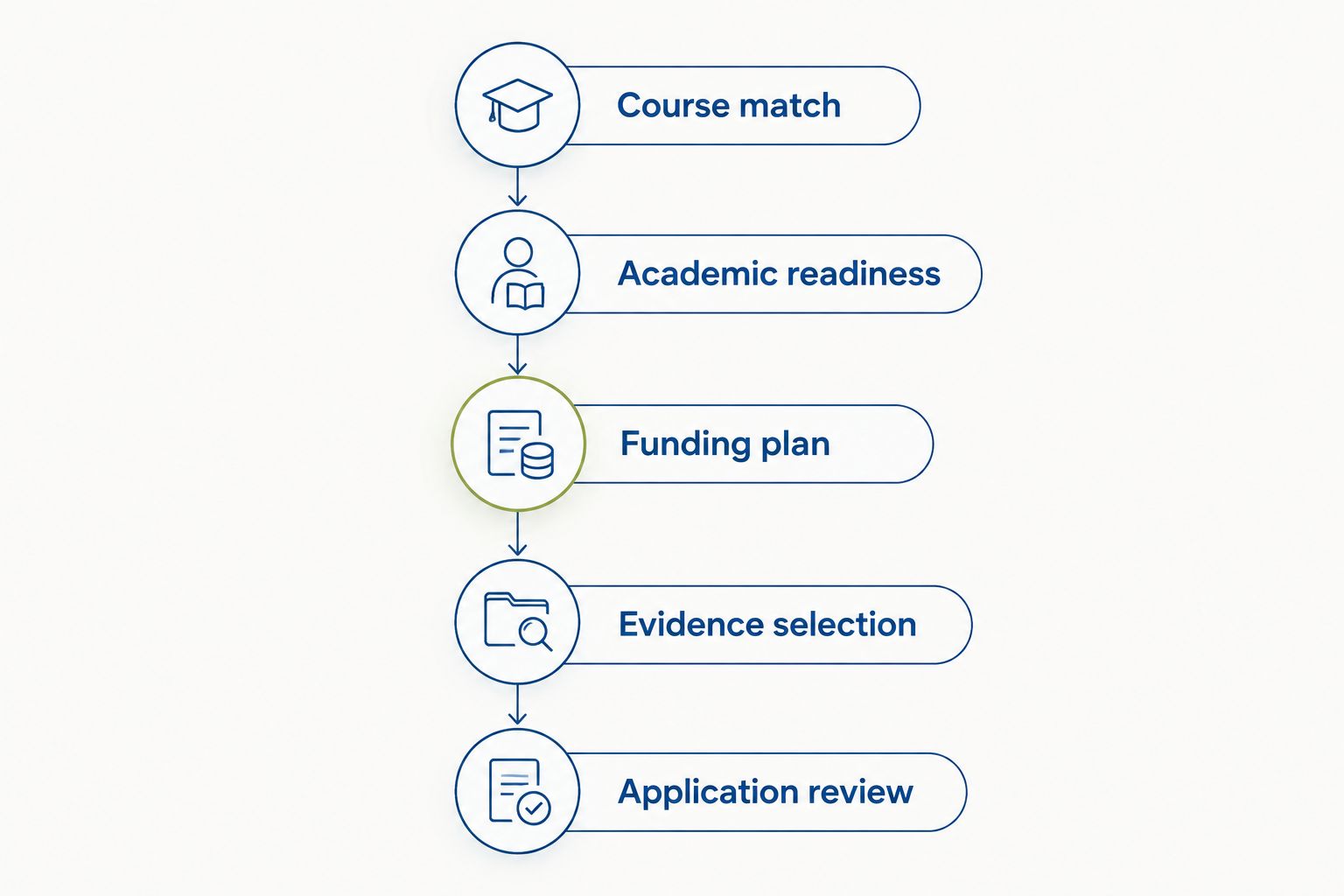
For your 2026 applications, build the plan in this order. Each step should produce a document you can use, not another collection of university names.
Course match
Write down your intended engineering fields and compare required modules. Identify whether you apply to the university, engineering program, or named course. This prevents a broad institutional reputation from hiding a poor subject match.
Academic readiness
Map your school subjects and qualifications to each university's official requirements. Check mathematics and science preparation, testing, and English-language evidence separately. Do not transfer one university's policy to another or assume your school location settles your English-language requirements.
Funding plan
Calculate the full family commitment using each university's current official cost information. Include living expenses, travel, insurance where required, and the degree's duration. Record whether international applicants qualify for the aid you intend to request and whether requesting aid affects admission.
Evidence selection
Choose activities that demonstrate technical curiosity and sustained work. A project with clear decisions and documented learning is easier to explain than a long list of unrelated certificates. Use this guide to summer programs for aspiring engineers to investigate relevant preparation, not as a checklist of credentials you must collect.
Application review
Build a separate requirements sheet for every university and course. Record deadlines from official sources, required written responses, recommendations, and selection stages. Families following different school calendars should work backward from those deadlines rather than borrowing another student's timeline.
This is where personalized guidance matters. Ivy Central's college admissions counseling is best for families seeking an individualized US and UK application strategy. Caroline Linger and Jose Kumar work directly with each student; university admission decisions remain with the institutions.
How these universities were ranked
The order prioritizes undergraduate course structure, subject flexibility, and identifiable learning pathways. MIT is the broad technical default; each subsequent university owns a different decision slot. This is not a claim that one institution delivers better outcomes for every international student.
Official university admissions pages govern application requirements. Engineering department pages govern course content and progression; international offices govern student-specific employment guidance. Recheck those sources for your intended entry cycle before submitting an application.
Which engineering college should you choose?
Start with MIT if you want broad technical exploration, then add universities that solve a different educational need. Stanford addresses interdisciplinary interests, Georgia Tech cooperative education, and Purdue an organized first-year engineering pathway.
For a focused UK application, compare Imperial's named degrees with Cambridge's general Engineering course. Neither model is inherently better: the useful distinction is how clearly you know your discipline now.
Do not restrict your final list to these institutions. Add universities with suitable courses and a workable funding plan, and assess admission risk separately. Ivy Central helps families connect those decisions with each student's academic record, interests, and application evidence.
FAQ
What’s the best engineering college for international students in 2026?
MIT is the default recommendation in this guide for broad technical exploration. Stanford, Georgia Tech, Purdue, Imperial, and Cambridge address different priorities, so course structure and funding should determine your personal shortlist.
Is Stanford better than MIT for engineering?
Stanford is the stronger fit in this guide when combining engineering with another substantial academic interest is your priority. MIT is the default for broad technical study; compare actual degree requirements rather than relying on reputation alone.
Should I study engineering in the US or UK?
Choose by course structure, subject certainty, and funding rather than country alone. The universities compared here offer different levels of flexibility, and UK applicants need to examine the named course they are applying to.
Can international students participate in Georgia Tech co-op?
International students must meet applicable program and employment-authorization requirements to participate in co-op. Consult Georgia Tech’s co-op program and Office of International Education before building your degree plan around paid work.
Do engineering universities offer financial aid to international students?
International financial-aid eligibility differs by university. Check whether aid is available to your applicant category, whether an aid request affects admission, and which documents and deadlines apply.
How long is Cambridge’s engineering degree?
Cambridge’s Engineering course has a 4-year route leading to BA and MEng qualifications. The first 2 years cover general engineering, followed by 2 years of specialist study.
Do I need a summer engineering program to apply?
A summer engineering program is not a universal admissions requirement. Choose one for relevant learning, and focus on explaining your own work and academic development rather than collecting program names.
How can Ivy Central help with engineering applications?
Ivy Central provides personalized college admissions counseling and strategy for students pursuing top US and UK universities. Caroline Linger and Jose Kumar work directly with each student; counseling does not guarantee admission.
One last thing
Before keeping a university on your list, choose a required engineering module and explain why you want to study it. If you cannot move beyond the institution's name, return to the course information. That simple exercise improves both your shortlist and the substance of your application writing.
Related guides
- Best need-blind universities for international students
- Best scholarships for Indian students to study in the US
- Best universities for computer science in the UK